
Table of Contents
How to Choose Study Chair: Perfect Guide for Students
Choosing the right study chair is one of the most important decisions for students because it directly impacts posture, concentration, comfort, and long-term health. Understanding how to choose study chair correctly is essential, especially for students who spend long hours studying, attending online classes, completing homework, or preparing for exams. On average, students sit for 4 to 10 hours daily, and during this time, the quality of seating plays a major role in productivity and physical well-being.
A poor-quality chair can quickly lead to problems such as back pain, neck strain, shoulder stiffness, and reduced focus. These issues not only affect health but also lower study efficiency. On the other hand, a well-designed study chair supports natural posture, improves blood circulation, and allows students to concentrate for longer periods without discomfort. This is why selecting the right chair should never be based only on price or appearance.
When learning how to choose study chair, it is important to focus on key factors such as ergonomics, seat comfort, back support, durability, and adjustability. Ergonomically designed chairs help maintain correct spinal alignment, reducing stress on the body during long study sessions. Adjustable features ensure that the chair can suit different heights and study environments, making it a long-term investment.
In today’s modern education system, students study in various environments such as home study rooms, coaching institutes, libraries, and digital learning setups. Each space requires a chair that provides comfort and stability for continuous sitting. A good study chair acts as the foundation of a productive learning setup, helping students stay focused, comfortable, and motivated throughout their study routine.
Choosing wisely ensures better learning, better posture, and better academic performance.
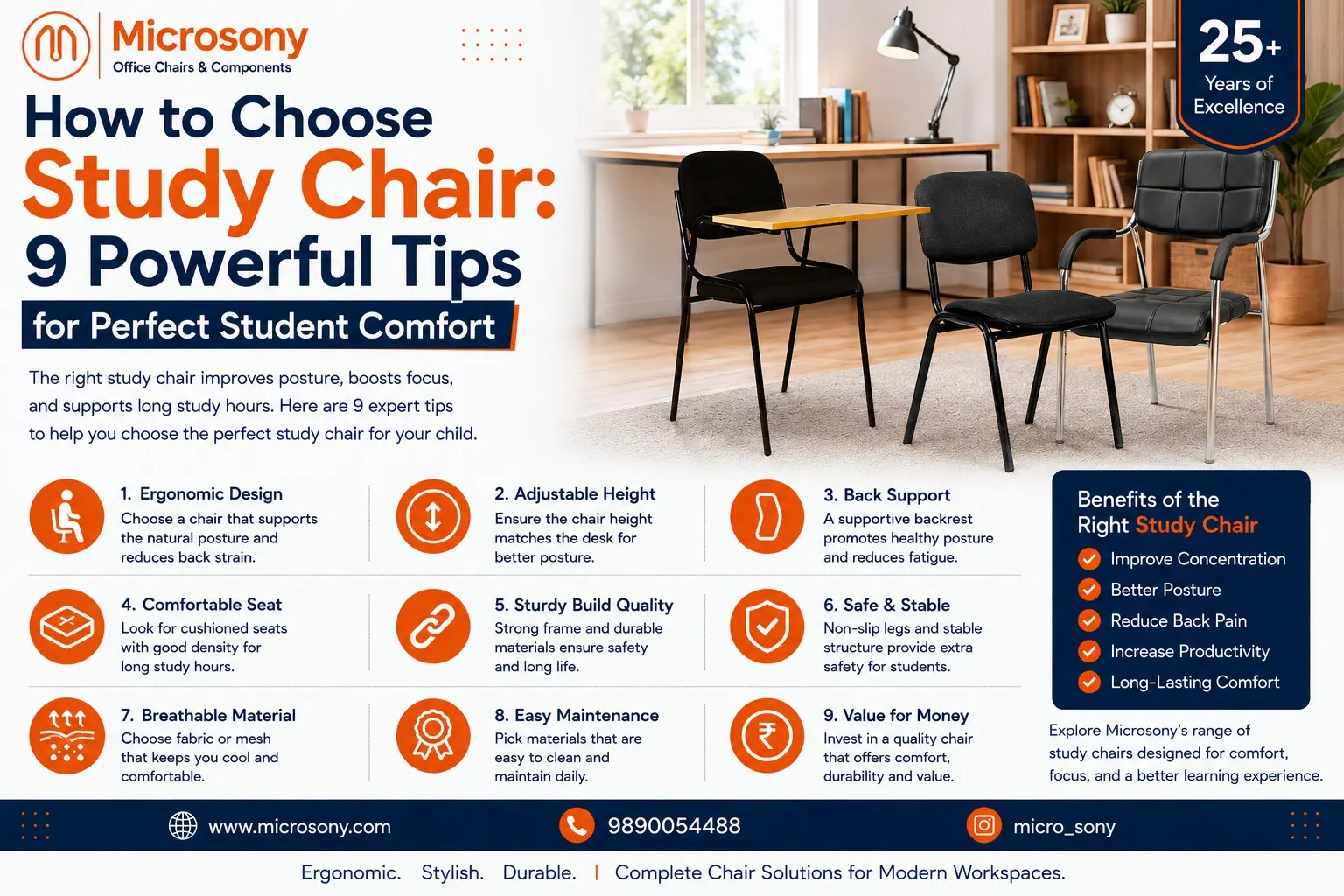
1. Focus on Ergonomic Design
The most important factor when selecting a study chair is ergonomics, as it directly affects posture, comfort, and long study performance. An ergonomic chair is designed to support the natural curve of the spine and maintain a healthy sitting position without putting extra pressure on the back, neck, or shoulders. It helps students stay in a balanced posture even during long study hours, reducing the chances of slouching or leaning forward.
A good ergonomic study chair improves blood circulation, reduces muscle fatigue, and prevents early tiredness while studying. This allows students to focus better and study for longer periods without discomfort. Proper lumbar support and well-designed seating also help in maintaining spinal alignment, which is essential for long-term health. Overall, ergonomic design plays a key role in improving concentration, productivity, and learning efficiency for students.
2. Check Seat Height and Adjustability
Seat height plays a very important role in ensuring proper sitting comfort and healthy posture for students. When choosing a study chair, it is essential that the seat height allows the feet to rest completely flat on the ground while the knees remain at a natural 90-degree angle. This position helps maintain balance in the body and reduces unnecessary pressure on the thighs, lower back, and spine during long study sessions.
If the chair is too high, the feet will hang in the air, which can reduce blood circulation and cause discomfort in the legs. If the chair is too low, it forces the student to bend forward, leading to poor posture and strain on the neck and back. Both situations can negatively affect concentration and make studying uncomfortable over time.
Adjustable chairs are highly recommended because they offer flexibility to match different student heights and study setups. As students grow, their seating requirements change, so an adjustable chair ensures long-term usability without needing frequent replacements. It also helps in adapting the chair to different desk heights, making it suitable for home study tables, classrooms, or coaching centers.
3. Ensure Proper Back Support
Proper back support is essential when learning how to choose study chair, especially for students who sit for long study hours every day. A well-designed chair plays a major role in understanding how to choose study chair correctly because it must support the natural curve of the spine, particularly the lower back (lumbar region). This helps maintain a healthy and upright posture without putting extra pressure on the spine, shoulders, or neck.
When students do not know how to choose study chair properly, they often select chairs without proper back support. This leads to slouching or leaning forward, which over time can cause posture problems, back pain, and fatigue. Poor seating choices also reduce concentration, making study sessions less effective.
A good study chair helps solve this issue by encouraging correct spinal alignment and distributing body weight evenly across the back. This improves comfort, reduces strain, and allows students to sit for longer periods without discomfort. When you understand how to choose study chair, back support becomes one of the most important factors to consider for long-term health and productivity.
4. Choose Comfortable Cushioning
When learning how to choose study chair, comfortable cushioning is a very important factor for long study hours. The seat cushioning directly affects comfort, posture, and concentration. A good study chair should have medium-firm cushioning because it provides the right balance of softness and support. This helps students sit comfortably while still maintaining proper body posture during study sessions.
If you are understanding how to choose study chair, avoid chairs that are too soft or too hard. Very soft cushioning may feel comfortable initially, but it allows the body to sink too much, which reduces posture control and leads to slouching. On the other hand, very hard seats create pressure points that cause discomfort and fatigue quickly.
Medium-firm cushioning supports even weight distribution and reduces strain on the hips and lower back. This improves sitting comfort, increases focus, and allows students to study for longer hours without pain or distraction.
5. Look at Build Quality and Durability
When learning how to choose study chair, build quality and durability are very important factors that should not be ignored. A study chair is used daily for long hours, so it must be strong enough to handle continuous use without breaking or losing stability. High-quality materials such as metal frames, reinforced plastic, and strong joints ensure long-lasting performance and safety for students.
Understanding how to choose study chair also means checking whether the chair can handle regular weight and movement without wobbling or weakening over time. A durable chair provides better stability, which helps students sit comfortably and focus on their studies without distraction.
Durable study chairs are especially important for schools, coaching centers, libraries, and home study setups where furniture is used frequently. Investing in strong build quality reduces repair and replacement costs while ensuring long-term comfort and reliability for students during daily study routines.
6. Consider Space and Room Setup
When learning how to choose study chair, it is very important to consider the available space and room setup before making a final decision. The size and design of the chair should match the study area so that the room remains comfortable, organized, and easy to use. A well-planned space improves focus and creates a better learning environment for students.
If you are understanding how to choose study chair, small rooms require compact and space-saving chairs that do not occupy too much area. These chairs help maintain proper movement space and prevent the study area from feeling crowded. On the other hand, larger rooms can easily accommodate ergonomic office-style study chairs that offer more features such as better back support and adjustability.
Proper space balance is essential because a cluttered or overcrowded study area can reduce concentration and create distractions. A well-arranged setup with the right chair helps maintain a clean, organized, and distraction-free environment, which supports better focus, comfort, and productivity during study sessions.
7. Improves Focus and Productivity
When learning how to choose study chair, it is important to understand how the right chair directly improves focus and productivity. A comfortable and supportive study chair allows students to sit for long hours without pain or distraction, which helps them concentrate better on studies, homework, and exam preparation.
If you know how to choose study chair, you will realize that proper seating reduces common issues like back pain, neck strain, and frequent posture adjustments. When the body is well-supported, the mind stays relaxed and focused, leading to better learning efficiency and longer study sessions without interruption.
A good study chair also encourages stable posture, which reduces unnecessary movement and fatigue. This helps students maintain consistency in their study routine and improves memory retention. Overall, understanding how to choose study chair ensures better comfort, stronger focus, and higher productivity, making study time more effective and less stressful for students.
8. Choose Based on Usage Type
When learning how to choose study chair, one important factor is understanding the usage type because every student has different study environments and needs. The right chair for one situation may not be suitable for another, so selecting based on use ensures better comfort, support, and productivity.
If you are studying how to choose study chair, for home study setups, a comfortable padded chair is the best choice because it provides long-lasting comfort for extended study hours. For coaching classes or training centers, durable and compact chairs are more suitable as they save space and withstand daily heavy use. In library environments, silent and stable seating is preferred so that students can focus without distractions. For online learning or computer-based study, ergonomic adjustable chairs are ideal because they provide better posture support and flexibility.
Choosing the right chair based on usage type ensures that students get maximum comfort and performance in every learning environment.
9. Avoid Common Mistakes
When learning how to choose study chair, many students and parents make simple mistakes that can lead to long-term discomfort and poor posture. Avoiding these errors is just as important as knowing the correct selection factors.
One of the most common mistakes is buying a chair only based on price. While budget is important, choosing the cheapest option often means compromising on comfort, durability, and ergonomic support. Another mistake is ignoring back support. Without proper lumbar support, students may develop slouching habits, which can cause back pain over time.
Many people also make the error of selecting oversized chairs for small rooms, which reduces space efficiency and creates a cluttered study environment. Similarly, ignoring seat height compatibility can lead to poor posture, as the student may sit too high or too low compared to the study table.
Understanding how to choose study chair properly helps avoid these mistakes and ensures long-term comfort, better posture, and improved study performance.
Why Good Study Chairs Matter for Students

A good study chair plays an important role in supporting both physical health and academic success, especially for students who spend long hours studying every day. When students understand how to choose study chair correctly, they can select seating that supports proper posture, reduces strain on the body, and creates a comfortable learning environment that encourages consistent study habits.
A well-designed study chair helps maintain correct spinal alignment, which reduces pressure on the back, neck, and shoulders. This prevents fatigue and discomfort during long study sessions, allowing students to remain focused for extended periods. When the body feels comfortable and supported, the mind can concentrate better on learning without frequent distractions caused by pain or restlessness.
Good seating also plays a key role in improving study efficiency. Students who sit comfortably are more likely to study longer without breaks, retain information more effectively, and stay mentally engaged with their subjects. Over time, this leads to better academic performance and improved exam results.
In simple terms, choosing the right chair is not just about comfort—it is about building a strong foundation for healthy study habits, better focus, and long-term academic success.
Trusted Quality Seating Solutions
When learning how to choose study chair, it is important to consider trusted brands that focus on quality, comfort, and long-term durability. Reliable manufacturers like Microsony design study chairs that combine ergonomic support, strong build quality, and user comfort to meet the needs of students and educational institutions.
Understanding how to choose study chair also means selecting a chair that supports proper posture during long study hours. High-quality study chairs are built with durable materials and tested structures that ensure stability, safety, and long-lasting performance. These chairs help reduce fatigue and provide better seating comfort for continuous learning.
For students who spend hours studying at home, in coaching centers, or in libraries, choosing the right chair becomes essential. A well-designed study chair improves focus, reduces physical strain, and creates a more productive learning environment. Over time, this leads to better concentration, improved study habits, and stronger academic performance.
In simple terms, knowing how to choose study chair and selecting a trusted quality product ensures both comfort and health, making study time more effective and stress-free.
Final Thoughts
Choosing the right study chair is not a luxury—it is a necessity for students who spend long hours studying every day. A well-designed chair plays a crucial role in supporting correct posture, reducing physical strain, and improving overall learning comfort. When students sit in a properly designed chair, they experience less fatigue, better focus, and more productive study sessions.
Understanding how to choose study chair helps students and parents make better decisions beyond just appearance or price. Instead of focusing only on design or cost, it is important to prioritize ergonomics, comfort, durability, and proper back support. These factors ensure long-term benefits for both health and academic performance.
A good study chair creates a stable and comfortable learning environment where students can concentrate for longer periods without discomfort. Over time, this leads to improved study habits, better concentration, and stronger academic results. Investing in the right chair is ultimately an investment in a student’s health, comfort, and future success.
FAQ-how to choose study chair
What is the most important factor in how to choose study chair?
The most important factor in how to choose study chair is ergonomic design. An ergonomic chair supports the natural curve of the spine and helps maintain correct posture during long study hours. It reduces pressure on the lower back, neck, and shoulders, preventing fatigue and discomfort. A good study chair also improves concentration by keeping the body relaxed and well-supported. Students who use ergonomic chairs can study for longer periods without pain, making it an essential factor for better learning performance and long-term health benefits.
Why is back support important when choosing a study chair?
Back support is a key element in how to choose study chair because it directly affects spinal health and posture. Proper lumbar support keeps the lower back in a natural position, preventing slouching and long-term pain. Without good back support, students often develop poor sitting habits that lead to discomfort and reduced focus. A chair with proper backrest design helps maintain alignment, reduces fatigue, and allows students to study comfortably for longer hours. This improves productivity and overall learning efficiency.
What seat height is best for a study chair?
When learning how to choose study chair, seat height plays a major role in comfort. The ideal height allows the student’s feet to rest flat on the ground while knees form a 90-degree angle. This position ensures proper blood circulation and reduces strain on the thighs and lower back. If the chair is too high or too low, it can lead to discomfort and poor posture. Adjustable chairs are the best option because they allow customization based on student height and study table size.
Is cushioning important in a study chair?
Yes, cushioning is very important in how to choose study chair because it directly affects sitting comfort. Medium-firm cushioning is considered ideal as it provides a balance of comfort and support. Soft cushions may cause the body to sink, leading to poor posture, while hard seats can create pressure points and discomfort. Proper cushioning helps students sit for longer hours without pain, improves focus, and reduces fatigue. It also supports better posture, making study sessions more productive and comfortable.
How does a study chair improve student focus?
A well-designed chair plays a major role in how to choose study chair because it directly affects focus and concentration. When students sit comfortably, they experience less physical discomfort, allowing them to concentrate better on studies. Good seating reduces distractions caused by back pain, neck strain, or frequent posture changes. This helps students study for longer durations with improved attention and memory retention. Over time, a comfortable study chair contributes to better academic performance and a more productive learning routine.
Should study chairs be adjustable?
Yes, adjustability is an important feature in how to choose study chair. Adjustable chairs allow changes in height, tilt, and sometimes armrest position, making them suitable for different student heights and study setups. As students grow, their seating needs change, so adjustable chairs provide long-term usability. They also help maintain correct posture by aligning the chair properly with the study table. This flexibility ensures better comfort, reduces strain, and supports healthy sitting habits during long study sessions.
What type of study chair is best for small rooms?
For small rooms, compact chairs are best when learning how to choose study chair. Space-saving designs ensure that the study area remains organized and clutter-free. Lightweight chairs or simple ergonomic chairs without bulky frames work best in limited spaces. These chairs still provide comfort and support while maximizing room efficiency. Choosing the right size is important because overcrowded spaces can reduce focus and create discomfort. A compact study chair helps maintain a clean and productive study environment.
How does build quality affect a study chair?
Build quality is very important in how to choose study chair because it determines durability and safety. A strong frame made from metal or reinforced materials ensures long-term use without damage or instability. Poor-quality chairs may break or lose balance over time, affecting comfort and posture. High build quality provides better support during daily use, especially for students who study for long hours. It also reduces maintenance costs and ensures consistent performance in home, school, or coaching environments.
Can a study chair affect academic performance?
Yes, a study chair can indirectly affect academic performance. In how to choose study chair, comfort and posture play a big role in learning efficiency. A good chair reduces physical discomfort, allowing students to focus better and study for longer hours. Poor seating can cause pain and distraction, leading to reduced concentration and productivity. A well-designed study chair improves comfort, supports better posture, and helps students stay focused, which ultimately leads to better academic results and improved study habits.
Why should parents invest in a good study chair?
Parents should invest in a good chair when considering how to choose study chair because it supports both health and education. A quality study chair helps maintain proper posture, reduces back pain, and improves concentration. This creates a healthy and productive learning environment for students. Since children spend many hours studying daily, a good chair becomes a long-term investment in their comfort and academic success. It also prevents future health issues related to poor posture and sitting habits.