
Table of Contents
Adaptable Office Seating Options: Complete Guide for Modern Workspaces
Introduction
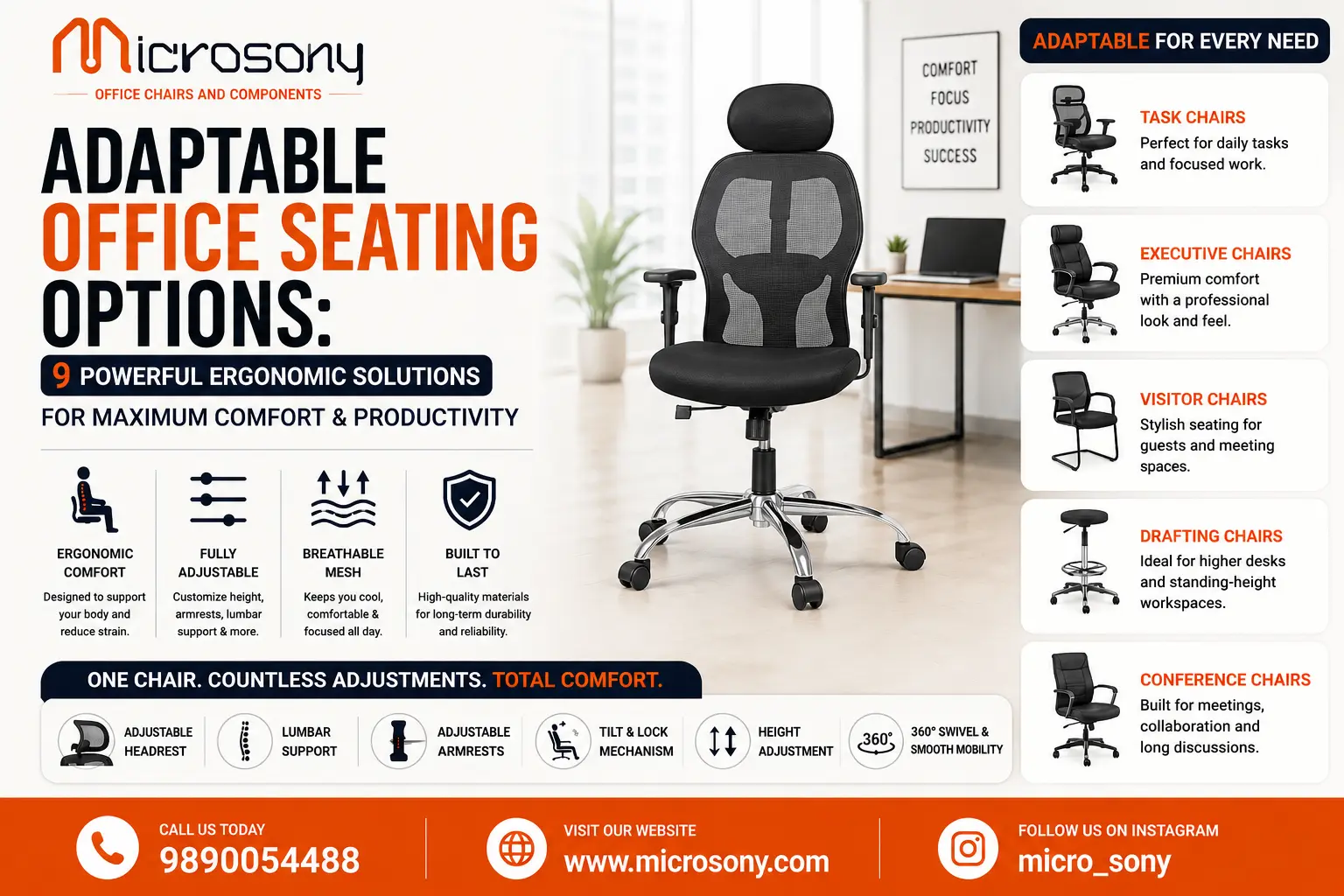
In today’s modern work culture, flexibility, comfort, and health awareness have become essential pillars of every productive office environment. Employees, freelancers, entrepreneurs, and remote workers now spend long hours seated at their desks, often handling multiple tasks, virtual meetings, and continuous screen time throughout the day. This extended sitting routine makes seating quality extremely important for both physical well-being and professional performance. That is where adaptable office seating options play a vital role in transforming the way people work by offering customized comfort and ergonomic support tailored to individual needs.
Unlike traditional fixed chairs that offer limited support and minimal flexibility, adaptable seating solutions are specifically designed to adjust according to different body postures, working styles, and daily usage requirements. These chairs allow users to modify height, backrest angle, arm positioning, and lumbar support, ensuring that the seating experience remains comfortable and supportive even during long and uninterrupted working hours. This flexibility not only enhances comfort but also reduces physical strain and helps maintain a healthy posture throughout the day.
A well-designed adaptable chair supports long working hours by reducing pressure on the spine, improving blood circulation, and promoting natural body alignment. It helps prevent common issues such as back pain, neck stiffness, and fatigue, which are often caused by poor seating habits. Whether it is a corporate office setup or a home workspace environment, choosing the right adaptable office seating options directly impacts productivity, focus, and overall work efficiency, making it an essential investment for modern professionals who value both comfort and performance.
Why Adaptable Office Seating Options Matter
The biggest advantage of adaptable office seating options is flexibility, which plays a crucial role in modern workspace comfort and productivity. Every individual has a different body structure, height, posture, and sitting preference, and a single fixed chair simply cannot provide the same level of comfort for everyone. This is where adaptable seating becomes essential, as it allows users to adjust key features such as seat height, back support angle, lumbar positioning, and armrest placement according to their personal needs and working style.
This customization ensures that the chair supports the body in a natural and balanced position, reducing unnecessary pressure on the spine and joints. As a result, users experience better comfort even during long working hours, whether they are typing, attending meetings, or focusing on detailed tasks. The ability to adjust seating according to different activities also makes work more efficient and less physically tiring.
Over time, adaptable office seating options help reduce common workplace health issues such as back pain, neck stiffness, shoulder fatigue, and poor posture habits. These problems are often caused by prolonged sitting in non-ergonomic positions. By promoting proper spinal alignment and balanced weight distribution, adaptable chairs not only improve daily comfort but also contribute to long-term musculoskeletal health and posture correction.
In workplaces where employees sit for 8–10 hours or more every day, adaptable seating is no longer just a luxury or comfort feature—it has become a necessity for maintaining health, focus, and productivity. Investing in the right seating solution directly enhances work efficiency, reduces fatigue, and supports a healthier and more sustainable working environment.
Key Features of Adaptable Office Seating Options
Modern office chairs come with advanced features that make them highly comfortable and user-friendly.
Adjustable Height System
Height adjustment ensures proper alignment between the chair and desk, reducing strain on the arms and back.
Ergonomic Back Support
Ergonomic design supports the natural curve of the spine, helping maintain a healthy posture during long working hours.
Tilt and Recline Function
Tilt features allow users to relax during breaks, reducing pressure on the lower back and improving circulation.
Adjustable Armrests
Armrests reduce shoulder strain and provide better support during typing and desk work.
Smooth Mobility Base
A strong wheelbase allows easy movement, making it easier to multitask within the workspace.
Benefits of Adaptable Office Seating Options
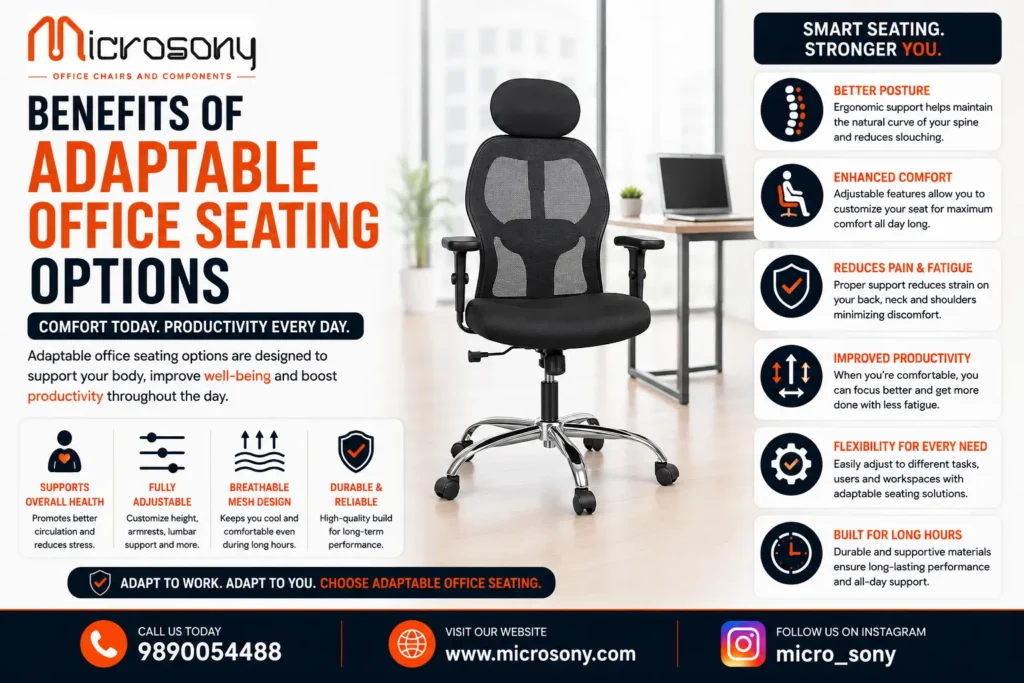
Choosing adaptable office seating options offers several long-term advantages that go far beyond basic comfort. In modern work environments where employees and professionals spend long hours seated, the right seating solution plays a direct role in health, focus, and overall performance. Adaptable chairs are designed to adjust according to individual needs, which helps create a more personalized and supportive working experience for every user.
One of the biggest benefits is improved productivity. When seating is comfortable and properly adjusted, it significantly reduces physical discomfort such as back pain, neck strain, and shoulder stiffness. This allows employees to stay focused for longer periods without frequent breaks caused by discomfort. As a result, work output becomes more consistent and efficient throughout the day.
Proper ergonomic support in adaptable office seating options also plays a key role in maintaining spinal health. These chairs encourage correct posture alignment, reducing long-term risks of posture-related problems that often develop due to prolonged sitting in poorly designed furniture. Over time, this leads to better physical well-being and fewer work-related health issues.
Another important benefit is increased energy levels. When the body is well-supported and free from unnecessary strain, fatigue reduces significantly, allowing individuals to stay active and mentally alert during working hours. This directly improves concentration and decision-making ability.
In addition, adaptable seating enhances overall workplace efficiency. Comfortable employees tend to work better, stay engaged for longer periods, and require fewer breaks due to discomfort or fatigue. This naturally leads to improved performance and smoother workflow within the organization.
Finally, adaptable office seating options also contribute to the visual appeal of the workspace. Modern ergonomic designs create a professional and premium office environment, improving both employee satisfaction and client impressions.
Types of Adaptable Office Seating Options
Different workplaces require different seating solutions based on usage and comfort needs.
Ergonomic Office Chairs
Best for long working hours with full adjustability and lumbar support.
Mesh Office Chairs
Breathable design that keeps users cool and comfortable during extended use.
Executive Chairs
Premium seating designed for managers and leadership roles with high comfort levels.
Task Chairs
Simple and flexible chairs designed for multitasking environments.
Common Mistakes to Avoid
Many people make critical mistakes while selecting adaptable office seating options, which often leads to discomfort, poor posture, and reduced productivity in the long run. One of the most common errors is choosing chairs based only on design or appearance rather than focusing on ergonomic performance. While a stylish chair may enhance the office look, it does not guarantee proper support for long working hours.
Another major mistake is ignoring ergonomic features such as lumbar support, adjustable height, tilt mechanism, and armrest flexibility. Without these features, the chair cannot properly adapt to the user’s body, which defeats the purpose of adaptable office seating options. Over time, this can lead to back pain, neck stiffness, and overall physical strain.
Many users also make the mistake of selecting non-adjustable or low-quality chairs simply because they are cheaper. However, this short-term saving often results in long-term discomfort and frequent replacements, making it a poor investment choice for work environments that require daily long sitting hours.
In addition, overlooking durability and build quality is another common issue. A weak base, poor cushioning, or low-grade materials can quickly reduce the lifespan of the chair and affect stability during use.
To avoid these problems, it is important to always prioritize adjustability, comfort, and durability over appearance alone. Choosing high-quality adaptable office seating options ensures better posture, improved comfort, and long-term productivity, making it a smarter investment for any modern workspace.
Maintenance Tips for Long Life
To ensure long-lasting performance and consistent comfort, proper care of your seating is essential. Even the best adaptable office seating options can lose their durability, smooth functionality, and ergonomic support if they are not maintained regularly. Since these chairs are used daily for long working hours, small maintenance habits can significantly improve their lifespan and overall performance.
Regular cleaning is one of the most important steps in maintaining hygiene and appearance. Dust, dirt, and sweat can gradually affect the fabric, mesh, or leather surface, reducing both comfort and visual appeal. By cleaning your chair regularly, you keep it fresh, professional-looking, and suitable for everyday use in modern office environments.
Lubricating moving parts such as wheels, tilt mechanisms, and gas lift systems ensures smooth operation and prevents unnecessary friction or noise. This helps maintain the flexibility and adaptability that define adaptable office seating options, allowing users to adjust and move the chair effortlessly.
It is also important to avoid overloading the chair beyond its recommended weight capacity, as excessive pressure can damage the internal structure and reduce stability over time. In addition, tightening screws and joints periodically helps maintain firmness and prevents wobbling during use.
Lastly, keeping the chair away from excessive moisture and heat protects its materials and internal components from damage. By following these simple maintenance practices, you can significantly extend the lifespan of your adaptable office seating options, ensuring they remain comfortable, durable, and reliable for daily professional use.
How to Choose the Right Adaptable Office Seating Options
Choosing the right adaptable office seating options requires careful attention to comfort, functionality, and long-term durability. In modern work environments, where professionals spend long hours sitting, the right chair plays a direct role in health, focus, and productivity. A well-selected chair not only improves posture but also reduces fatigue and supports efficient working throughout the day.
The first and most important factor to consider is ergonomic support. Proper lumbar and back alignment is essential because it helps maintain the natural curve of the spine. This reduces pressure on the lower back and prevents discomfort during long working hours. Without proper ergonomic design, even the most stylish chair can lead to posture-related issues over time.
Next, it is important to check for adjustable features. A good adaptable office seating options setup should include height control, tilt mechanism, armrest flexibility, and headrest support. These features allow the chair to adapt to different users and working positions, making it suitable for shared workspaces as well as individual use. Adjustability ensures personalized comfort, which is crucial for long-term use.
Material quality also plays a major role in comfort. Breathable mesh is ideal for long sitting hours as it allows air circulation and prevents heat buildup. On the other hand, premium cushioning provides a softer and more luxurious seating experience. Choosing the right material depends on the user’s working style and comfort preference.
In addition, a strong base with smooth-rolling wheels is essential for stability and mobility. It ensures safe movement within the workspace without compromising balance or durability. A weak base can reduce the lifespan of the chair and affect daily usability.
By carefully evaluating these factors together, you can confidently select the best adaptable office seating options that enhance comfort, improve posture, and boost productivity. A well-chosen chair becomes a long-term investment in both health and professional performance, making everyday work more efficient and comfortable.
Conclusion
In today’s modern work environment, seating has evolved far beyond being just a basic office requirement—it has become a key factor that directly influences productivity, health, and overall work performance. As professionals spend increasing hours at their desks, the importance of choosing the right seating solution has grown significantly. This is where adaptable office seating options play a vital role in creating a healthier and more efficient workspace.
Investing in high-quality, adaptable seating ensures better posture by supporting the natural alignment of the spine and reducing unnecessary strain on the back, neck, and shoulders. It also enhances comfort during long working hours, allowing users to stay focused and energized throughout the day without frequent discomfort or fatigue. When the body is properly supported, the mind naturally performs better, leading to improved concentration, decision-making, and productivity.
Moreover, well-designed adaptable office seating options contribute to higher workplace efficiency by minimizing physical distractions and reducing the need for constant posture adjustments. This allows employees and professionals to work more smoothly and consistently, even during demanding schedules.
Ultimately, a good office chair is not just furniture—it is an investment in long-term health, comfort, and professional success. Choosing the right seating solution ensures a balanced work experience where both physical well-being and performance are equally supported, making it an essential element of every modern office setup.
Frequently Asked Questions (FAQs) – Adaptable Office Seating Options
1. What are adaptable office seating options?
Adaptable office seating options are ergonomic chairs designed to adjust according to user needs such as height, back support, armrest position, and tilt angle. These chairs provide personalized comfort, making them suitable for long working hours in modern offices and home workspaces.
2. Why are adaptable office seating options important?
They are important because every individual has a different body structure and sitting style. Adaptable seating helps maintain proper posture, reduces strain on the spine, and improves comfort during extended working hours. This directly enhances productivity and reduces health issues caused by poor seating.
3. Who should use adaptable office seating options?
Anyone who spends long hours sitting can benefit from adaptable office seating options, including office employees, entrepreneurs, freelancers, students, designers, developers, and remote workers. They are especially useful for people working 6–10 hours daily at a desk.
4. How do adaptable office chairs improve productivity?
These chairs improve productivity by reducing physical discomfort and fatigue. When the body is well-supported, users can focus better on work tasks without frequent breaks or posture adjustments. This leads to better concentration, efficiency, and overall work performance.
5. What features should I look for in adaptable office seating options?
Key features include adjustable height, lumbar support, tilt mechanism, armrest flexibility, breathable material, and a strong base with smooth wheels. These features ensure comfort, durability, and long-term ergonomic support.
6. Are mesh chairs better than cushioned chairs?
Both have advantages. Mesh chairs offer better airflow and are ideal for long hours in warm environments, while cushioned chairs provide a softer and more premium feel. The best adaptable office seating options depend on personal comfort preference and usage duration.
7. Can adaptable office chairs prevent back pain?
Yes, they can significantly reduce back pain when used correctly. Proper lumbar support and spinal alignment help maintain a healthy sitting posture, reducing pressure on the lower back and minimizing the risk of chronic pain caused by long sitting hours.
8. How long do adaptable office seating options last?
High-quality chairs can last between 3 to 7 years or more, depending on usage and maintenance. Regular cleaning, avoiding overload, and tightening screws can significantly increase their lifespan.
9. Are adaptable office chairs good for home offices?
Yes, they are perfect for home offices. Since remote workers often spend long hours at their desks, adaptable office seating options provide the necessary comfort, support, and flexibility required for productive home-based work environments.
10. How do I choose the best adaptable office seating options?
To choose the best option, focus on ergonomics, adjustability, material quality, and durability. Always test for lumbar support, seat comfort, and flexibility. A good chair should support your body naturally and improve your working experience without causing strain or discomfort.