
Table of Contents
Office Chair Materials: Complete Guide to Types, Benefits, Durability, and How to Choose the Best One
Choosing the right office chair is not just about design, aesthetics, or brand reputation; it is fundamentally about the materials used in its construction and how those materials perform in real-world working conditions. Office chair materials directly influence comfort levels, durability, ergonomic support, maintenance requirements, and even long-term physical health. In today’s modern work environments—whether corporate offices, home offices, coworking spaces, or hybrid setups—the demand for high-quality, ergonomically designed seating has increased significantly. With professionals spending an average of 8 to 12 hours a day sitting at their desks, selecting the right materials has become one of the most critical decisions when investing in an office chair.
Office chair materials play a major role in shaping the overall sitting experience, affecting everything from breathability and temperature control during long working hours to posture alignment, spinal support, and daily productivity. High-quality materials can enhance focus and reduce fatigue, while low-quality options often lead to discomfort, excessive sweating, poor posture, and even chronic back pain over time. In many cases, inferior materials also result in faster wear and tear, forcing users to replace chairs more frequently and increasing long-term costs.
On the other hand, carefully selected materials—such as breathable mesh, high-density foam, durable metal frames, and premium upholstery—ensure a balanced combination of comfort, strength, and longevity. The right material choice can transform a standard office chair into an ergonomic solution that supports health, enhances efficiency, and improves overall work performance.
This detailed guide explores all major office chair materials in depth, explaining their advantages, disadvantages, ideal use cases, and how to select the best combination based on your personal needs, working environment, and budget.
Understanding the Importance of Office Chair Materials
The materials used in an office chair are not just a matter of visual appeal or design aesthetics; they play a crucial role in determining how the chair performs in real-world usage over long hours. Every component of a chair—whether it is the seat cushioning, backrest support, frame structure, armrests, gas lift, or base—relies on carefully selected materials that are engineered to provide strength, flexibility, stability, and long-lasting comfort.
Different office chair materials serve different purposes and directly impact the overall sitting experience. For example, breathable mesh materials are designed to promote continuous air circulation, which helps prevent heat buildup and discomfort, making them especially suitable for hot climates and extended working hours. In contrast, leather upholstery delivers a premium, executive appearance along with a soft and luxurious seating feel, although it may require more maintenance and is less breathable in warmer environments.
Similarly, the structural integrity of an office chair largely depends on its frame materials. Metal frames such as steel or aluminum provide exceptional durability and load-bearing strength, ensuring long-term stability even under heavy daily use. On the other hand, high-quality plastic components are often used to reduce overall weight and production cost while still maintaining functional support in non-load-bearing areas.
When selecting an office chair, understanding these materials in detail becomes essential for making an informed decision. It allows you to strike the right balance between comfort, durability, ergonomics, aesthetics, and budget, ensuring that the chair not only looks good but also supports healthy posture and long-term productivity.
Mesh as an Office Chair Material
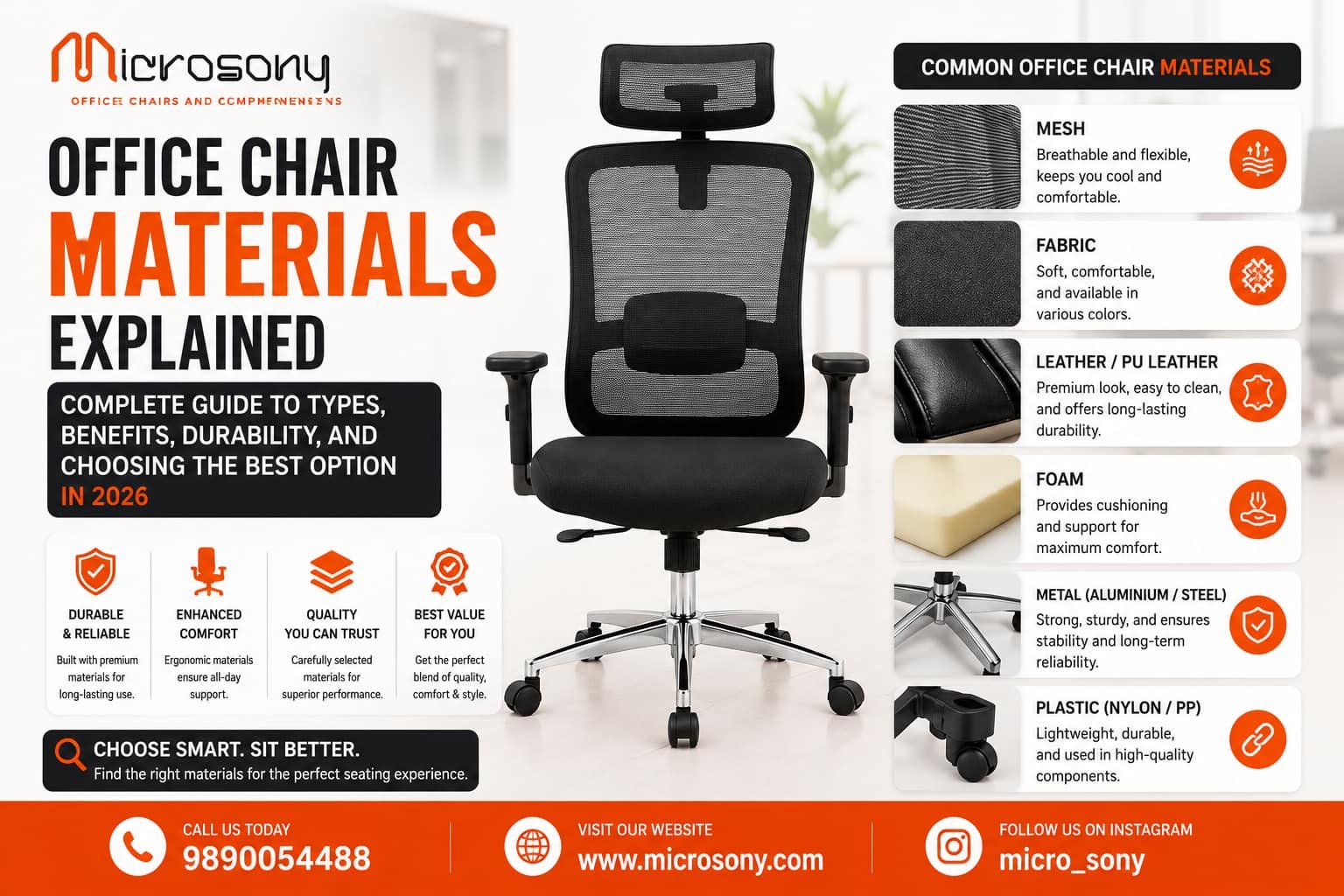
Mesh is one of the most popular modern office chair materials, especially in ergonomic chair designs. It is made from synthetic fibers woven into a breathable net-like structure. The biggest advantage of mesh is its ventilation. Unlike solid materials, mesh allows continuous airflow, which helps regulate body temperature and prevents sweating during long working hours.
Mesh chairs are widely used in IT companies, startups, and home offices because they offer both comfort and flexibility. The material adapts to the body’s natural curve, providing good lumbar support without feeling too rigid. Another advantage is its lightweight nature, making chairs easy to move around.
However, mesh also has some limitations. Over time, low-quality mesh may lose tension, leading to reduced support. It may not provide the same plush comfort as cushioned leather or fabric chairs. Despite this, high-quality mesh chairs are extremely durable and ideal for people who prioritize breathability and ergonomic posture support.
Leather as an Office Chair Material
Leather is often associated with luxury, executive offices, and premium seating. It is one of the most visually appealing office chair materials, offering a rich and professional appearance. Leather chairs are typically made from genuine leather or synthetic variants like PU leather or bonded leather.
One of the biggest advantages of leather is comfort. It provides a soft, cushioned feel that enhances sitting experience. It is also easy to clean—spills and dust can usually be wiped off quickly. Leather chairs are commonly used in managerial cabins and conference rooms where appearance and authority matter.
However, leather has certain drawbacks. It tends to retain heat, making it uncomfortable in warm climates or during long sitting sessions. Over time, low-quality leather may crack or peel. Additionally, genuine leather chairs are more expensive compared to other materials.
Despite these limitations, leather remains a top choice for professionals who want a premium, authoritative, and elegant office environment.
Fabric as an Office Chair Material
Fabric is one of the most commonly used office chair materials due to its affordability and comfort. Fabric chairs are usually padded with foam and covered with woven textiles that come in a variety of colors and textures.
The biggest advantage of fabric is comfort during long sitting hours. It provides a soft, cushioned feel and does not become too hot or too cold, making it suitable for all seasons. Fabric chairs are also highly customizable in terms of design, allowing businesses to match office interiors.
However, fabric is more prone to stains, dust accumulation, and odor retention compared to leather or mesh. It requires regular cleaning and maintenance. Over time, fabric may also wear out or lose its original appearance.
Even with these limitations, fabric remains a popular choice for budget-friendly office setups and home offices where comfort is a priority.
Plastic Components in Office Chairs
Plastic is widely used in office chair materials, especially in armrests, back support frames, and seat bases. High-quality industrial plastic is strong, lightweight, and cost-effective. It allows manufacturers to create ergonomic shapes while keeping production costs low.
Plastic chairs are often found in entry-level office setups or temporary seating arrangements. The material is resistant to rust and corrosion, making it suitable for long-term use in controlled environments.
However, plastic has limitations in terms of load-bearing capacity and premium feel. Cheap plastic may crack under pressure or lose shape over time. For this reason, plastic is usually combined with metal or reinforced materials for better performance.
Metal as a Structural Office Chair Material
Metal is the backbone of most high-quality office chairs. It is used in frames, bases, gas lifts, and support structures. Common metals include steel and aluminum, both known for their strength and durability.
Steel frames provide excellent stability and long-lasting performance, making them ideal for heavy-duty office chairs. Aluminum, on the other hand, is lighter and resistant to rust, often used in premium ergonomic chairs.
Metal ensures that the chair can withstand daily wear and tear, especially in corporate environments where usage is heavy. The only downside is that metal alone is not comfortable, so it must be paired with cushioning materials like foam, mesh, or fabric.
Foam and Cushioning Materials
Foam is one of the most critical office chair materials because it determines seating comfort. High-density foam provides better support and lasts longer without sagging. Low-density foam, while cheaper, tends to lose shape quickly.
Memory foam is also used in premium chairs as it adapts to the user’s body shape, reducing pressure points and improving posture. The quality of foam directly affects how comfortable a chair feels during extended working hours.
Poor-quality foam can lead to back pain and discomfort, while high-quality foam enhances productivity and reduces fatigue.
Wood in Office Chair Design
Although less common in modern ergonomic chairs, wood is still used in traditional office seating and classic designs. Wooden components are mainly found in armrests, decorative frames, and executive chairs.
Wood adds a natural and premium aesthetic, often used in boardrooms or luxury office interiors. However, wood is heavier and less flexible compared to modern materials like metal or plastic. It also requires maintenance to prevent damage from moisture or termites.
How Office Chair Materials Affect Ergonomics
Ergonomics is one of the most important aspects of office furniture design, and office chair materials play a major role in determining how effectively a chair supports the human body during long working hours. The right combination of materials such as mesh, foam, and metal ensures proper spine alignment, improved lumbar support, and long-term posture correction, which are essential for maintaining comfort and productivity in any workspace.
Different office chair materials contribute uniquely to ergonomic performance. Breathable mesh, for example, helps regulate body temperature by allowing continuous airflow, which reduces heat buildup and keeps the user comfortable during extended sitting sessions. High-density foam cushioning plays an equally important role by evenly distributing body weight, reducing pressure points, and minimizing strain on the hips and lower back. Meanwhile, strong metal frames provide the structural foundation needed to maintain stability, durability, and correct seating posture over time.
When these office chair materials are combined effectively in a well-designed chair, the result is a balanced ergonomic system that supports both physical health and workplace efficiency. Such chairs help reduce fatigue, improve focus, and encourage better sitting habits throughout the day.
On the other hand, poor selection of office chair materials can significantly impact user comfort and health. Low-quality cushioning may collapse over time, weak frames may cause instability, and non-breathable surfaces can lead to overheating and discomfort. These issues often result in back pain, poor posture, reduced concentration, and overall lower productivity.
How to Choose the Best Office Chair Materials
Selecting the right office chair materials depends on several important factors, including daily usage patterns, budget, climate conditions, and personal comfort preferences. Since office chair materials directly influence comfort, durability, and ergonomic support, making the right choice is essential for long-term productivity and health. For professionals who work long hours at a desk, breathable office chair materials like mesh are highly recommended because they allow continuous airflow and help maintain a cooler sitting experience throughout the day.
For premium office setups, leather remains a popular choice among office chair materials due to its elegant appearance, soft cushioning, and executive appeal. It not only enhances the visual aesthetics of the workspace but also provides a comfortable seating experience, especially in controlled indoor environments. Fabric, on the other hand, is one of the most versatile office chair materials and is best suited for users who want a balance between affordability, comfort, and customization in design.
When durability is the top priority, combining strong metal frames with high-density foam cushioning offers the best long-term performance among all office chair materials. This combination ensures structural stability while maintaining seating comfort even after years of regular use. In hotter climates, mesh stands out as one of the most practical office chair materials due to its excellent breathability and heat reduction properties.
Ultimately, understanding your daily usage patterns and workspace environment is the key to selecting the most suitable office chair materials that provide both comfort and long-term value.
Future Trends in Office Chair Materials
The future of office chair materials is moving toward sustainability, smart ergonomics, and advanced composites. Eco-friendly recycled materials are becoming more popular as companies focus on environmental responsibility. Smart fabrics with temperature control and anti-bacterial properties are also emerging in premium office furniture.
Manufacturers are also experimenting with hybrid materials that combine mesh, foam, and flexible polymers to create adaptive seating systems. These innovations aim to improve comfort, reduce health risks, and increase productivity.
Conclusion
Office chair materials play a crucial role in determining comfort, durability, and overall workplace efficiency. Whether it is breathable mesh, luxurious leather, versatile fabric, strong metal, or supportive foam, each material serves a specific purpose. The right combination of materials ensures better posture, improved productivity, and long-term value.
When choosing an office chair, it is important to focus not just on design but on the materials used in its construction. A well-informed decision can significantly improve your daily working experience and long-term health.
Frequently Asked Questions (FAQs) on Office Chair Materials
1. What are the most commonly used office chair materials?
The most commonly used office chair materials include mesh, leather, fabric, plastic, metal, and foam. Each material serves a different purpose in chair construction. Mesh is widely used for backrests due to its breathability, while leather is preferred for premium executive chairs because of its luxurious look and comfort. Fabric is popular for general office seating due to its affordability and softness. Metal is used in the frame and base for strength and durability, while plastic is commonly found in armrests and support components. Foam is used in seat cushioning to ensure comfort during long working hours. Together, these office chair materials create a balanced combination of comfort, durability, and ergonomic support depending on the chair design.
2. Which office chair material is best for long working hours?
For long working hours, breathable office chair materials like mesh combined with high-density foam cushioning are considered the best option. Mesh allows continuous airflow, which prevents heat buildup and sweating during extended sitting periods. High-density foam supports proper weight distribution and reduces pressure on the lower back and hips. This combination improves posture and minimizes fatigue, making it ideal for professionals who work 8 to 12 hours a day. While leather and fabric are comfortable, they may not provide the same level of ventilation as mesh, especially in warm climates. Therefore, mesh-based office chair materials are generally recommended for productivity and comfort during long work sessions.
3. Are leather office chair materials better than fabric or mesh?
Leather is often considered one of the most premium office chair materials, but whether it is better than fabric or mesh depends on the user’s needs. Leather offers a luxurious appearance, soft seating experience, and is easy to clean, making it ideal for executive offices and formal environments. However, it can retain heat and may become uncomfortable in hot climates. Fabric is softer and more breathable than leather but is more prone to stains and wear over time. Mesh, on the other hand, excels in ventilation and ergonomic support but may lack the plush comfort of leather. Therefore, no single material is universally better; the best choice depends on climate, usage, and comfort preference.
4. How do office chair materials affect durability?
Durability is highly dependent on the quality of office chair materials used in construction. Metal frames, especially steel or aluminum, provide strong structural support and long-lasting stability. High-density foam retains its shape longer compared to low-quality foam, ensuring sustained comfort. Mesh materials, when of high quality, maintain tension and support over time, while poor-quality mesh may sag or tear. Leather can last for years if properly maintained but may crack if exposed to heat or lack of care. Fabric, although comfortable, may wear out faster without regular maintenance. Therefore, the combination of strong metal, premium foam, and quality upholstery materials significantly improves the overall durability of an office chair.
5. How should I choose the right office chair materials for my needs?
Choosing the right office chair materials depends on several factors such as working hours, climate, budget, and workspace environment. If you work long hours or live in a hot region, mesh is the best option due to its breathability and cooling effect. For premium office environments or executive seating, leather is preferred for its elegant and professional look. Fabric is suitable for budget-friendly setups where comfort is still a priority. If durability is your main concern, choosing a chair with a strong metal frame and high-density foam cushioning is essential. Ultimately, understanding your daily usage pattern and comfort needs will help you select the most suitable office chair materials for long-term satisfaction and productivity.