
Table of Contents
Introduction
An Office Chair Base is one of the most important components of any office chair, yet it is often overlooked when purchasing or maintaining seating furniture. While people usually focus on the backrest, seat cushion, or armrests, the base is responsible for providing stability, mobility, weight distribution, and overall durability. Without a strong office chair base, even the most ergonomic chair cannot deliver the comfort and safety users expect.
Whether you work from home, manage a corporate office, run a coworking space, or purchase furniture in bulk, choosing the right Office Chair Base can significantly improve the chair’s lifespan and user experience. A high-quality chair base ensures smooth movement, prevents tipping, supports heavy loads, and keeps the chair balanced throughout long working hours.
Modern office chair bases are available in different materials, sizes, and designs to suit various applications. From lightweight nylon bases for home offices to heavy-duty aluminum and steel bases for commercial environments, every option offers unique advantages. Understanding these differences helps buyers make informed purchasing decisions while avoiding costly replacements.
In this comprehensive guide, we’ll explain everything you need to know about Office Chair Base, including its types, materials, benefits, features, maintenance tips, replacement process, and how to choose the best one for your office chair.
What is an Office Chair Base?
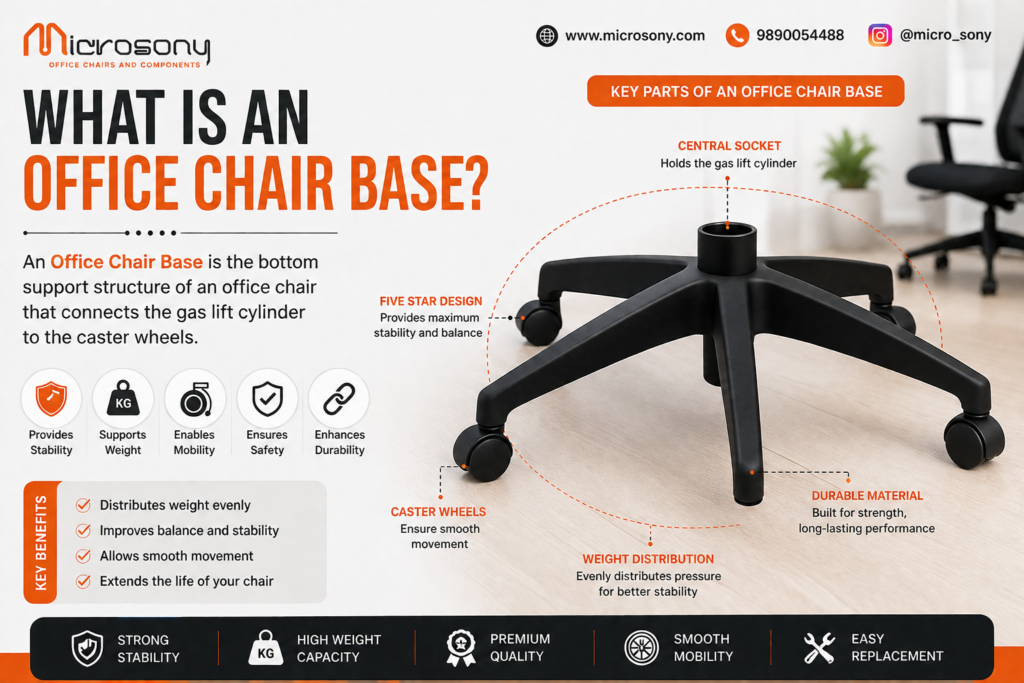
An Office Chair Base is the bottom support structure of an office chair that connects the gas lift cylinder to the caster wheels. Typically designed with five legs in a star-shaped pattern, it evenly distributes the user’s weight while providing balance and mobility.
The chair base performs several essential functions:
- Supports the entire chair structure
- Holds the gas lift mechanism securely
- Provides mounting points for caster wheels
- Improves stability and prevents tipping
- Enables smooth movement across different floor surfaces
- Enhances durability for everyday office use
Without a reliable office chair base, the chair may wobble, become unstable, or wear out prematurely.
Why is an office seating component Important?
Many people underestimate how much the chair base contributes to overall seating performance. A premium-quality base improves not only safety but also comfort and productivity.
Better Stability
The wide five-star design evenly spreads body weight, reducing the chances of tipping even when users lean backward or rotate.
Improved Mobility
A strong office chair base allows caster wheels to roll smoothly across carpet, wooden flooring, or tiles.
Longer Chair Life
Durable bases resist bending, cracking, and fatigue, extending the lifespan of the entire chair.
Supports Heavy Weight
Commercial-grade bases are designed to support higher weight capacities while maintaining structural integrity.
Enhanced User Safety
A damaged or poor-quality base can suddenly fail, leading to accidents. Investing in a quality base minimizes this risk.
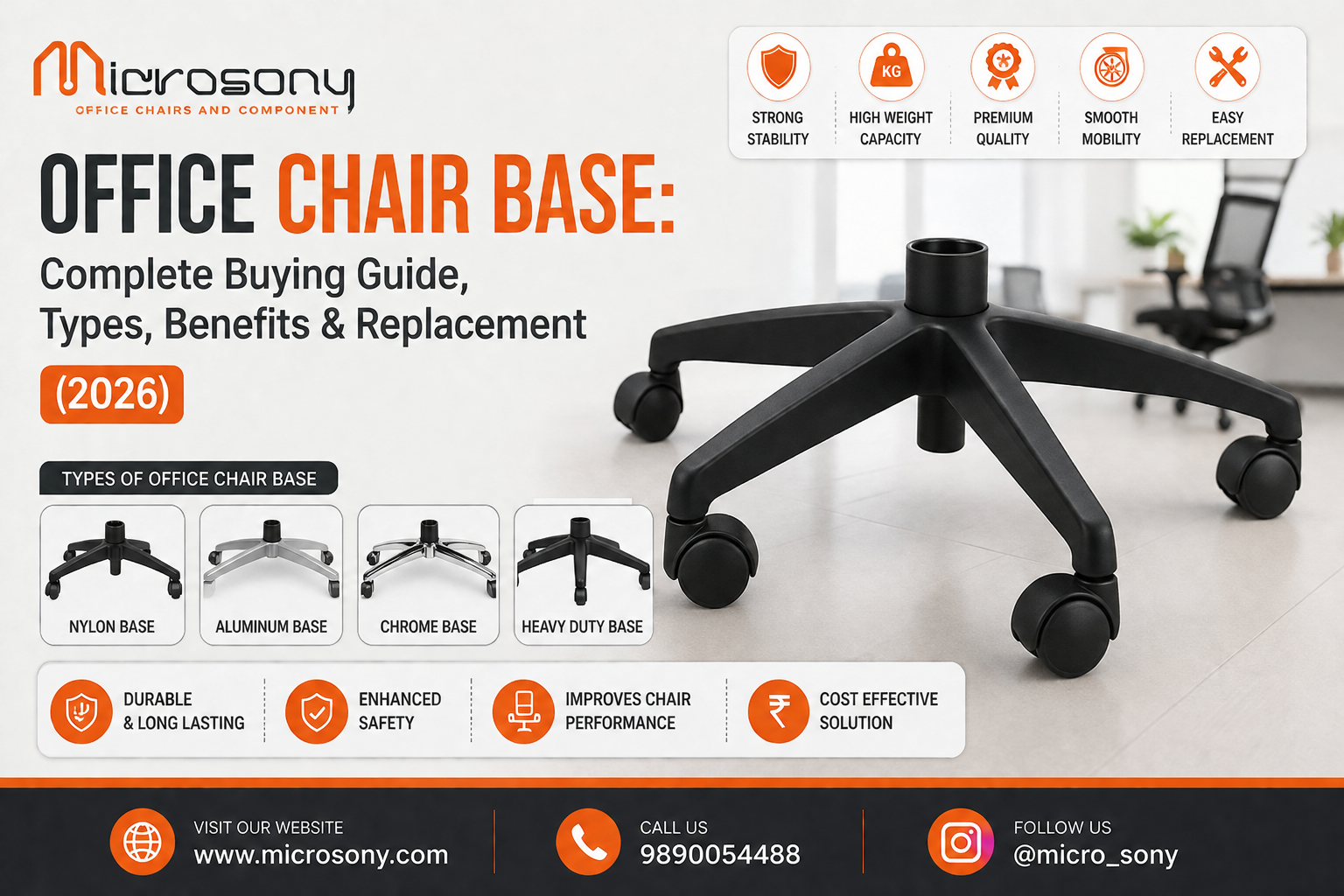
Different Types of Office Chair Base
1. Nylon Office Chair Base
Nylon chair bases are among the most common options in modern office chairs.
Advantages
- Lightweight
- Rust resistant
- Affordable
- Strong enough for daily office use
- Requires minimal maintenance
Best for:
- Home offices
- Study chairs
- Workstation chairs
- Standard office environments
2. Metal Office Chair Base
Metal bases are manufactured using steel or iron.
Benefits
- Extremely durable
- High load-bearing capacity
- Long service life
- Suitable for heavy-duty applications
Best for:
- Commercial offices
- Industrial environments
- Executive seating
3. Aluminum Office Chair Base
Aluminum bases combine premium appearance with excellent strength.
Advantages
- Corrosion resistant
- Lightweight compared to steel
- Premium finish
- Modern aesthetics
- Excellent durability
Suitable for:
- Executive chairs
- Premium office furniture
- Conference rooms
4. Chrome Office Chair Base
Chrome-plated bases offer both durability and elegant appearance.
Features include:
- Stylish finish
- Rust resistance
- Easy cleaning
- Professional office look
5. Heavy-Duty Office Chair Base
Designed specifically for high-capacity seating requirements.
Ideal for:
- Bariatric chairs
- 24/7 operation centers
- Commercial workplaces
- Large users
Common Materials Used in Office Chair Base Manufacturing
Choosing the right material determines how long the base will last.
Reinforced Nylon
- Durable
- Affordable
- Lightweight
- Resistant to corrosion
Reinforced Nylon
- Very strong
- Excellent weight capacity
- Suitable for industrial use
Aluminum Alloy
- Premium finish
- Lightweight
- Corrosion resistant
- Long lifespan
Chrome-Plated Steel
- Attractive appearance
- Scratch resistant
- Easy maintenance
Key Features to Consider Before Buying an office seating base
When purchasing an office chair base, evaluate several important factors.
Material Quality
Always choose durable materials capable of supporting your daily workload.
Weight Capacity
Check the manufacturer’s recommended load rating.
Compatibility
Ensure the base matches:
- Gas lift cylinder
- Chair mechanism
- Wheel size
- Chair model
Number of Legs
Most office chair bases feature a five-star design for optimal stability.
Finish
Depending on office aesthetics, choose:
- Matte nylon
- Chrome
- Powder-coated steel
- Polished aluminum
Benefits of a High-Quality office seating base
A premium office chair base provides numerous advantages.
Increased Durability
Quality materials resist cracking, bending, and long-term wear.
Improved Comfort
Stable seating allows users to focus without constantly adjusting posture.
Better Ergonomics
Balanced support improves overall ergonomic performance.
Cost Savings
Replacing only the chair base is significantly cheaper than purchasing an entirely new chair.
Professional Appearance
Premium bases improve the visual appeal of office furniture.
Signs You Need an Office Chair Base Replacement
Replacing a damaged chair base before complete failure improves safety.
Common warning signs include:
- Visible cracks
- Bent legs
- Broken caster sockets
- Chair wobbling
- Difficulty rolling
- Rust damage
- Uneven sitting position
- Strange noises while moving
Ignoring these problems may result in complete chair failure.
How to Replace an office seating base
Replacing a chair base is relatively simple.
Step 1
Turn the chair upside down.
Step 2
Remove the caster wheels.
Step 3
Separate the old base from the gas lift cylinder.
Step 4
Inspect the gas lift for damage.
Step 5
Install the new office chair base.
Step 6
Insert the caster wheels.
Step 7
Test stability before regular use.
Most replacements require only basic household tools.
office seating base Maintenance Tips
Proper maintenance extends the life of your chair.
Clean Regularly
Remove dust and debris from wheel sockets.
Tighten Components
Inspect wheels and gas lift periodically.
Avoid Excess Weight
Do not exceed recommended weight limits.
Check Wheels
Replace worn casters promptly.
Lubricate Moving Parts
Maintain smooth wheel movement using suitable lubricants.
Inspect for Cracks
Regular visual inspection helps identify damage early.
office seating base vs Cheap Alternatives
| Feature | Premium Office Chair Base | Cheap Base |
|---|---|---|
| Durability | Excellent | Low |
| Stability | High | Moderate |
| Weight Capacity | High | Limited |
| Material | Reinforced Nylon / Steel / Aluminum | Low-grade Plastic |
| Lifespan | 8–15 Years | 2–5 Years |
| Safety | Excellent | Lower |
| Maintenance | Minimal | Frequent |
Although premium bases may cost more initially, they offer better long-term value through enhanced durability and reliability.
Who Should Buy a High-Quality office seating base?
A durable office chair base is ideal for:
- Corporate offices
- Home office users
- Students
- Call centers
- IT companies
- Educational institutions
- Hospitals
- Government offices
- Retail businesses
- Furniture manufacturers
Common Mistakes to Avoid
Many buyers choose the wrong chair base due to lack of information.
Avoid these m
Conclusion
The Office Chair Base is the foundation of every office chair, directly influencing its stability, safety, durability, and overall performance. Whether you are purchasing a new chair, replacing a worn-out base, or sourcing components for commercial use, selecting the right base is essential for long-term reliability and user comfort.
By considering factors such as material quality, weight capacity, compatibility, and intended use, you can make an informed decision that extends the life of your chair and enhances your daily seating experience. Investing in a high-quality office chair base not only improves comfort but also reduces maintenance costs and ensures dependable performance for years to come.
Frequently Asked Questions (FAQs) About office seating component
1. What is an office seating component?
An Office Chair Base is the bottom support structure of an office chair that connects the gas lift cylinder to the caster wheels. It is typically designed with five legs in a star-shaped pattern to provide maximum stability and balance. The base evenly distributes the user’s weight, allowing the chair to move smoothly while reducing the risk of tipping. A high-quality base also contributes to the chair’s durability and overall performance. Whether the chair is used in a corporate office, home workspace, or educational institution, the base plays a critical role in ensuring safe and comfortable seating throughout the day.
2. Why is the Office Chair Base important?
The office chair base is essential because it supports the entire weight of both the chair and the user. A sturdy base keeps the chair stable, enables smooth movement, and ensures the gas lift and caster wheels function properly. If the base is weak or damaged, the chair may wobble, tilt, or even collapse, creating safety risks. Investing in a durable base improves comfort, extends the chair’s lifespan, and minimizes maintenance costs. It also helps maintain proper posture by providing a stable foundation for the chair’s ergonomic features.
3. What materials are commonly used to manufacture office chair bases?
Office chair bases are typically made from reinforced nylon, steel, aluminum alloy, or chrome-plated metal. Reinforced nylon is lightweight, rust-resistant, and suitable for everyday office use. Steel bases provide exceptional strength and are ideal for heavy-duty commercial environments. Aluminum alloy combines durability with a premium appearance while remaining lightweight. Chrome-plated bases offer an attractive finish and resist corrosion, making them popular for executive office furniture. Each material has unique advantages, and the right choice depends on the intended application, weight requirements, and budget.
4. How do I know if my office chair base needs replacement?
Several signs indicate that it may be time to replace your chair base. Visible cracks, bent legs, broken caster sockets, rust, or excessive wobbling are common warning signs. If the chair no longer rolls smoothly or feels unstable when sitting, the base may have weakened over time. Unusual noises during movement or difficulty maintaining balance are also indicators of damage. Replacing a worn-out base promptly improves safety and prevents further damage to other chair components such as the gas lift or caster wheels.
6. Are office chair bases universal?
Not all office chair bases are completely universal, although many follow standard dimensions. Compatibility depends on factors such as the diameter of the gas lift cylinder, caster wheel stem size, and overall chair design. Before purchasing a replacement, measure the existing base and verify the manufacturer’s specifications. Using an incompatible base may lead to instability or improper installation. Choosing a compatible replacement ensures optimal performance, safety, and durability for your office chair.
Which type of office chair base is best?
The best office chair base depends on your specific requirements. Reinforced nylon bases are ideal for home offices and general workplace use because they are lightweight, durable, and affordable. Steel bases are recommended for heavy-duty commercial applications where maximum strength is required. Aluminum bases provide an excellent combination of durability, corrosion resistance, and premium aesthetics, making them popular for executive offices. Selecting the right base depends on factors such as weight capacity, frequency of use, workplace environment, and budget.
8. How much weight can an office chair base support?
Weight capacity varies depending on the material and construction quality of the base. Standard reinforced nylon bases generally support between 100 and 150 kilograms. Heavy-duty steel or aluminum bases may support 180 kilograms or more. Commercial-grade seating often requires stronger bases to withstand continuous daily use. Always check the manufacturer’s recommended weight capacity before purchasing to ensure safe and reliable performance. Exceeding the recommended limit may reduce the lifespan of the chair and increase the risk of structural failure.
9. How long does an office chair base typically last?
A well-manufactured office chair base can last anywhere from 8 to 15 years, depending on usage, maintenance, and material quality. Chairs used in commercial offices may experience more wear than those used occasionally at home. Regular cleaning, avoiding excessive weight, and replacing worn caster wheels can significantly extend the base’s lifespan. Investing in high-quality materials usually results in better long-term performance and fewer replacement costs over the years.
10. How can I maintain my office chair base for maximum durability?
Proper maintenance helps ensure the chair base remains strong and reliable for many years. Clean the base regularly to remove dust and debris that can affect wheel movement. Inspect the caster wheels, gas lift, and base for signs of wear or damage. Tighten loose components whenever necessary and avoid exceeding the chair’s recommended weight limit. If the chair is exposed to moisture, wipe the base dry to prevent corrosion on metal models. Routine inspections and preventive maintenance can improve safety, enhance chair performance, and extend the lifespan of the entire seating system.