
Table of Contents
Introduction
Choosing the right seating is important in every professional environment, but it becomes even more significant in medical clinics, hospitals, dental practices, diagnostic centers, laboratories, and healthcare offices. Doctors and healthcare professionals often spend several hours examining patients, reviewing medical records, using computers, completing documentation, and conducting consultations. A suitable doctor chair can help create a comfortable and efficient working environment.
Medical professionals require seating that combines comfort, mobility, stability, ergonomic support, and easy maintenance. Unlike ordinary office seating, medical workspace chairs may need to accommodate frequent movement between a desk, examination area, computer, and patient seating area. Therefore, selecting the right design requires careful consideration of the working environment and daily requirements.
A well-designed doctor chair can complement a modern consultation room while providing practical support during long working sessions. Features such as adjustable height, supportive backrests, smooth-rolling casters, comfortable cushioning, and durable materials can make daily tasks easier.
The appearance of healthcare furniture also matters. A clean, professional, and well-organized consultation room can create a welcoming impression for patients. Modern seating can complement desks, examination equipment, cabinets, lighting, and other elements of a clinic interior.
This comprehensive guide explains the important features, benefits, materials, applications, buying considerations, maintenance tips, and ergonomic factors to consider when selecting professional medical seating in 2026.
What Is a Doctor Chair?
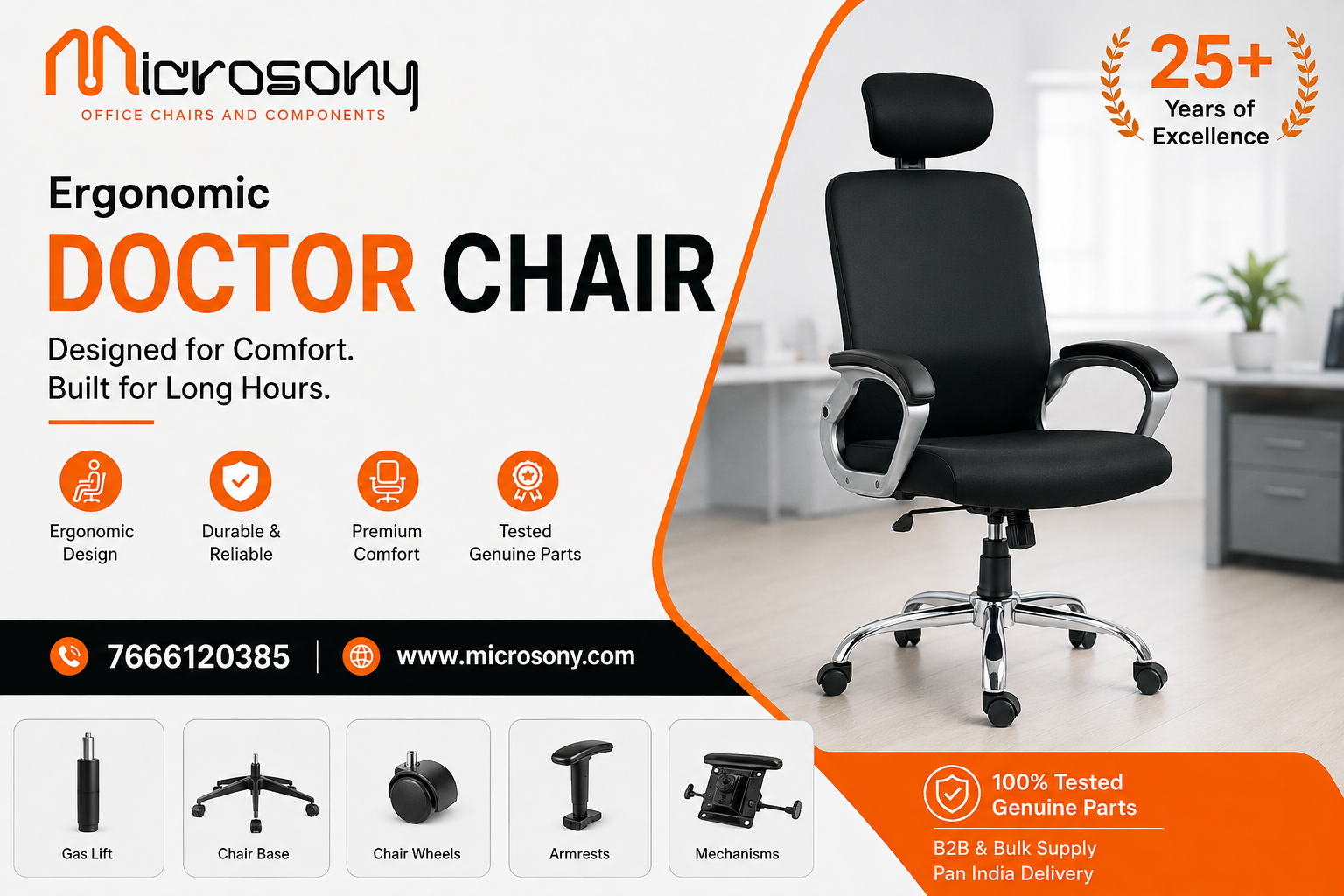
A doctor chair is a professional seating solution designed for doctors, physicians, dentists, consultants, and other healthcare professionals who work in clinical or medical environments.
These chairs are generally designed to provide comfortable seating while allowing professionals to move efficiently around their workstations. Depending on the model, they may include adjustable height, ergonomic back support, armrests, swivel functionality, caster wheels, and other practical features.
The exact design varies according to the intended application. A chair used at a consultation desk may have different requirements from one used in a laboratory, dental clinic, or examination room.
Before purchasing, healthcare professionals should evaluate the chair according to:
- Daily usage
- Workspace dimensions
- Required mobility
- Height adjustment
- Back support
- Seat cushioning
- Cleaning requirements
- Material quality
- Weight capacity
- Overall construction
Why Is a Doctor Chair Important?
Healthcare professionals may spend long periods seated while maintaining concentration and interacting with patients. An unsuitable chair can become uncomfortable and may make routine work more difficult.
A quality doctor chair provides a dedicated seating solution for professional medical environments. Its design can help users maintain a more comfortable working position while moving between different tasks.
Important advantages include:
- Improved seating comfort
- Better workstation mobility
- Adjustable positioning
- Professional appearance
- Easy integration with medical desks
- Durable construction
- Practical maintenance
- Efficient use of workspace
The right seating should support the user’s working routine rather than simply occupying space in the consultation room.
Key Features to Look For
When selecting a doctor chair, consider the following features carefully.
1. Adjustable Height
Height adjustment is one of the most useful features in professional seating. Doctors and healthcare workers have different body heights, while desks and workstations may also vary.
A height-adjustable chair allows users to position themselves appropriately relative to the desk or computer.
2. Ergonomic Backrest
A supportive backrest can improve overall seating comfort during extended work sessions. The backrest should provide appropriate support while allowing natural movement.
3. Comfortable Seat
Seat cushioning is particularly important for professionals who spend several hours seated. The ideal firmness depends on individual preference and working requirements.
4. Swivel Function
A 360-degree swivel mechanism can make it easier to access computers, documents, drawers, and nearby equipment without repeatedly moving the entire chair.
5. Caster Wheels
Smooth-rolling wheels provide mobility within the workstation. However, the caster design should be appropriate for the flooring used in the clinic.
6. Armrests
Armrests can provide additional support, although their necessity depends on the user’s work style and available space.
7. Durable Base
The base should be stable and capable of supporting regular professional use.
Ergonomic Benefits of a Doctor Chair
Ergonomics is an important consideration for healthcare professionals because clinical work can involve prolonged sitting, repeated movement, and frequent computer usage.
An ergonomic doctor chair can be selected according to the user’s body dimensions and workstation configuration.
Proper Height
The seat should be positioned appropriately relative to the work surface.
Back Support
The backrest should provide comfortable support without unnecessarily restricting movement.
Comfortable Seat Position
The user should be able to sit comfortably without excessive pressure on the legs.
Easy Movement
Swivel and caster functionality can reduce unnecessary movement around the workstation.
Adjustable Features
Adjustability allows users to customize the seating position according to their preferences.
Ergonomic seating should be combined with an appropriately designed desk, monitor position, keyboard placement, and regular movement throughout the workday.
Doctor Chair for Clinics
Clinics often have consultation rooms where doctors alternate between patient interaction, documentation, computer work, and administrative tasks.
A doctor chair for a clinic should be practical, comfortable, and easy to maintain.
Clinic owners should consider:
- Room size
- Desk dimensions
- Number of daily users
- Cleaning requirements
- Mobility
- Material durability
- Professional appearance
A well-selected chair can complement the overall design of a modern consultation room.
Doctor Chair for Hospitals
Hospitals have diverse working environments, including consultation rooms, administrative areas, diagnostic departments, and specialist clinics.
A doctor chair used in these environments should be selected according to the specific application.
Hospital furniture may experience frequent use, so durability and easy maintenance are particularly important. The chair should also be compatible with the available floor space and workstation.
Doctor Chair for Dental Clinics
Dental professionals often work in specialized environments where access, positioning, and mobility are important.
A doctor chair used at a dental workstation should allow the professional to move comfortably between the patient, instruments, computer, and documentation area.
Compact dimensions may be beneficial where space is limited. Smooth movement and adjustable height can also support efficient workflow.
Doctor Chair for Consultation Rooms
Consultation rooms require a balance between functionality and appearance. The furniture should look professional while providing practical support.
A doctor chair can be paired with a consultation desk, storage units, patient seating, and other furnishings to create a coordinated environment.
Neutral colors and clean designs are commonly suitable for professional healthcare interiors.
Doctor Chair for Medical Offices
Medical offices often combine clinical activities with administrative work. Professionals may spend part of the day examining patients and another part completing computer-based tasks.
A doctor chair with appropriate adjustability and mobility can provide flexibility for these different activities.
Before buying, consider the height of the desk, available legroom, flooring type, and required movement around the workstation.
Materials Used in Medical Seating
Material selection affects comfort, appearance, maintenance, and durability.
Mesh
Mesh provides breathability and a contemporary appearance. It may be useful in environments where airflow is important.
Fabric
Fabric seating can offer a soft and comfortable feel. However, buyers should consider cleaning and maintenance requirements.
Synthetic Leather
Synthetic leather is commonly selected for professional interiors because it can provide a polished appearance and relatively simple surface maintenance.
Genuine Leather
Leather can create a premium appearance and may be suitable for executive medical offices.
Plastic and Polymer
These materials may be used in chair components and can offer practical durability.
Metal
Metal is commonly used in frames, bases, and mechanisms where structural strength is required.
How to Choose the Right Doctor Chair
Selecting a doctor chair should be based on practical requirements rather than appearance alone.
Step 1: Identify the Work Environment
Determine whether the chair will be used in a clinic, hospital, dental office, laboratory, or private consultation room.
Step 2: Measure the Workspace
Check desk height, room dimensions, legroom, and movement space.
Step 3: Determine Daily Usage
A professional who sits for several hours may require more ergonomic features than someone who uses the chair occasionally.
Step 4: Check Adjustability
Look for useful adjustments such as seat height and reclining functionality.
Step 5: Evaluate Mobility
Determine whether swivel functionality and caster wheels are appropriate.
Step 6: Examine Materials
Choose materials according to comfort, durability, appearance, and cleaning requirements.
Step 7: Review Construction
Inspect the base, frame, wheels, mechanisms, and upholstery.
Step 8: Compare Overall Value
Consider quality, warranty, maintenance, and expected service life rather than price alone.
Comfort for Long Working Hours
Doctors and healthcare professionals may spend extended periods seated during consultations and administrative work. Comfortable seating can therefore contribute to a better working environment.
A doctor chair should provide suitable cushioning and support while allowing the user to change position when necessary.
However, even a highly ergonomic chair should not encourage continuous sitting without movement. Professionals should regularly change position and take appropriate breaks during long working sessions.
Importance of Mobility
Mobility is particularly useful in healthcare workspaces. Doctors may need to move between a desk, computer, patient seating, storage units, and other equipment.
A doctor chair with suitable casters and swivel functionality can make these movements easier.
The wheels should be compatible with the floor surface. For example, certain flooring types may require specific caster designs to provide smooth and controlled movement.
Design and Appearance
Medical furniture should create a clean and professional environment. Patients often form impressions based on the appearance and organization of a clinic.
A modern doctor chair can complement the overall interior while maintaining a professional visual identity.
Consider matching the chair with:
- Consultation desks
- Patient chairs
- Storage cabinets
- Lighting
- Wall colors
- Flooring
- Medical equipment
A coordinated interior can create a more organized appearance.
Durability and Build Quality
A professional doctor chair should be constructed to withstand regular usage.
Important components include:
- Strong base
- Durable caster wheels
- Reliable gas lift
- Quality adjustment mechanism
- Strong frame
- Durable upholstery
- Stable armrests
For commercial healthcare environments, durability can be particularly important because furniture may be used repeatedly by professionals throughout the day.
Easy Maintenance
Healthcare environments require practical maintenance. Seating should be selected with cleaning requirements in mind.
A doctor chair with an easy-to-clean surface can simplify routine maintenance.
Basic maintenance practices include:
- Regularly removing dust
- Cleaning surfaces according to manufacturer instructions
- Checking wheels
- Inspecting adjustment mechanisms
- Tightening loose fittings
- Checking upholstery for damage
Always use cleaning products that are appropriate for the chair’s specific material.
Doctor Chair vs Regular Office Chair
A standard office chair and a doctor chair may share several features, but their intended applications can differ.
Medical professionals may require greater mobility and easier integration with consultation workspaces. A general office chair may instead be optimized for computer-based desk work.
The best choice depends on the environment and user’s requirements rather than the product category alone.
Common Mistakes When Buying Medical Seating
Choosing Only Based on Price
Low price does not always mean good value. Consider durability and functionality.
Ignoring Measurements
A chair that is too large can make a consultation room uncomfortable.
Selecting Appearance Over Function
Professional styling is useful, but comfort and usability should remain priorities.
Ignoring Cleaning Requirements
Healthcare environments require practical maintenance.
Forgetting Warranty
Warranty support can be valuable for commercial furniture.
Not Testing the Chair
If possible, sit on the chair and test its adjustment mechanisms before purchase.
Benefits of Investing in Quality Seating
A quality doctor chair can provide several practical benefits for healthcare professionals and clinics.
Improved Comfort
Supportive seating can make daily desk work more comfortable.
Better Workspace Efficiency
Mobility can help professionals access nearby equipment and documents.
Professional Appearance
Modern furniture can improve the visual quality of a clinic.
Long-Term Value
Durable components may reduce replacement frequency.
Flexible Use
Adjustable designs can accommodate different working positions.
Doctor Chair for Modern Healthcare Interiors
Modern healthcare interiors increasingly emphasize comfort, cleanliness, functionality, and professional design.
A doctor chair can become an important part of this environment when selected to match the room’s layout and purpose.
Contemporary medical furniture often uses minimalist shapes, neutral colors, smooth surfaces, and ergonomic functionality. These characteristics can help create a calm and organized professional setting.
How to Create an Ergonomic Doctor’s Workspace
The chair is only one component of an ergonomic medical workstation.
The desk should be positioned at an appropriate height. Computer monitors should be arranged to minimize unnecessary neck movement. Keyboard and mouse placement should allow comfortable arm positioning.
Lighting should provide adequate visibility without excessive glare.
A doctor chair should work together with the desk, monitor, lighting, storage, and surrounding equipment.
The overall objective is to create a workspace that supports comfortable and efficient professional activities.
2026 Trends in Medical Office Seating
Healthcare furniture continues to evolve as clinics and professionals look for practical and attractive workspace solutions.
Important trends include:
- Ergonomic designs
- Adjustable seating
- Breathable materials
- Easy-clean surfaces
- Minimalist styling
- Compact furniture
- Durable components
- Professional finishes
- Flexible workstation layouts
These trends reflect the growing importance of comfort and workplace design in healthcare environments.
Maintenance Tips for Long-Term Use
Regular maintenance can help extend the service life of a doctor chair.
Clean Regularly
Remove dust and surface dirt regularly.
Inspect Casters
Check wheels for debris or damage.
Check the Gas Lift
Monitor height adjustment for unusual movement.
Inspect Screws and Fittings
Tighten loose components when necessary.
Protect the Upholstery
Use suitable cleaning methods according to the material.
Avoid Improper Usage
Do not exceed the manufacturer’s recommended weight capacity.
Buying Checklist
Before purchasing a doctor chair, use this checklist:
- ✔ Correct height
- ✔ Comfortable seat
- ✔ Supportive backrest
- ✔ Suitable lumbar support
- ✔ Appropriate mobility
- ✔ Stable base
- ✔ Durable materials
- ✔ Easy maintenance
- ✔ Suitable dimensions
- ✔ Professional appearance
- ✔ Warranty availability
- ✔ Appropriate weight capacity
This checklist can help buyers compare different models systematically.
Why Ergonomic Seating Is a Smart Investment
Healthcare professionals need to focus on patients and clinical responsibilities rather than uncomfortable furniture.
A doctor chair with suitable ergonomic features can support a more comfortable working environment and complement a professional consultation room.
The investment should be evaluated over the expected period of use. A durable product with appropriate features may offer better long-term value than an inexpensive chair that requires frequent replacement.
Final Thoughts
Selecting professional medical seating requires attention to comfort, ergonomics, mobility, durability, materials, dimensions, and maintenance. A doctor chair should be selected according to the user’s actual work requirements and the environment in which it will be used.
For clinics, hospitals, dental practices, and medical offices, the right chair can complement the workspace while providing practical functionality. Features such as adjustable height, supportive backrests, comfortable cushioning, swivel movement, caster wheels, and durable construction can all contribute to a better daily seating experience.
Buyers should avoid making decisions based solely on appearance or price. Instead, evaluate the complete product, including construction quality, available adjustments, material, warranty, maintenance requirements, and compatibility with the workstation.
In 2026, modern healthcare seating is increasingly focused on combining ergonomic functionality with professional aesthetics. Whether you are setting up a new clinic, upgrading an existing consultation room, or creating a private medical office, thoughtful furniture selection can make a meaningful difference.
The best doctor chair is ultimately the one that fits the user’s body, working style, workspace, and professional requirements. By comparing features carefully and choosing quality construction, healthcare professionals can create a comfortable, functional, and professional environment for their daily work.
Frequently Asked Questions
1. What is a doctor chair?
A doctor chair is professional seating designed for doctors and healthcare professionals working in clinics, hospitals, consultation rooms, dental practices, and medical offices.
2. What features should I look for?
Important features can include adjustable height, ergonomic back support, comfortable cushioning, swivel functionality, caster wheels, durable construction, and easy-to-maintain materials.
3. Is ergonomic seating important for doctors?
Yes. Doctors may spend significant periods seated during consultations, computer work, documentation, and administrative activities. Ergonomic features can contribute to a more comfortable workstation.
4. Is a high-back model better?
A high-back design can provide additional upper-body support, but the best design depends on the user’s preferences, workspace, and working requirements.
5. Which material is best?
The best material depends on the environment, cleaning requirements, comfort preferences, budget, and desired appearance.
6. Should medical seating have wheels?
Wheels can be useful when professionals need to move frequently around a workstation. However, the caster type should match the floor surface and intended usage.
7. How do I maintain the chair?
Regular cleaning, checking wheels and mechanisms, tightening loose fittings, and following the manufacturer’s maintenance instructions can help preserve the furniture.
8. Can this seating be used in dental clinics?
Yes, depending on the model. Dental professionals should prioritize mobility, adjustability, compact dimensions, and compatibility with their workstation.
9. Is a doctor chair suitable for long hours?
A suitable model with appropriate ergonomic features can provide comfortable support during extended work sessions. Users should still change positions and take regular movement breaks.
10. How should I choose the right model?
Evaluate your workspace, daily usage, required mobility, ergonomic features, materials, dimensions, durability, maintenance requirements, and overall value before purchasing.
Conclusion
Choosing the right doctor chair is an important part of creating a comfortable, practical, and professional medical workspace. Doctors often move between patient consultations, computer work, documentation, and examination activities, so seating should provide suitable support, mobility, adjustability, and durability. Medical seating options commonly include features such as height adjustment, swivel movement, caster wheels, supportive backrests, and comfortable cushioning.
A good doctor chair should also match the specific environment. Consultation rooms may benefit from ergonomic task seating, while examination areas can require height-adjustable stools or saddle-style seating. Material selection is equally important, particularly in healthcare settings where surfaces may need frequent cleaning.
Before purchasing, consider the chair’s ergonomic features, dimensions, material quality, mobility, adjustability, durability, maintenance requirements, and warranty. Avoid choosing a product based only on appearance or price. Instead, select seating that fits the doctor’s working style and the layout of the clinic or hospital.
Ultimately, the best doctor chair is one that combines comfort, ergonomic support, professional design, easy movement, and reliable construction. A thoughtful choice can help create a more organized and functional consultation environment while making everyday professional activities more comfortable.