
Table of Contents
Best Ergonomic Office Chairs for Back Pain Relief in 2026
Introduction
In today’s modern work culture, people spend more time sitting than ever before. Whether it is in corporate offices, home setups, startups, or executive cabins, long sitting hours have become unavoidable. With the rapid growth of digital jobs, remote working models, and computer-based tasks, professionals often sit for 8 to 10 hours or even longer every day. While this lifestyle has increased productivity and convenience, it has also created a serious health concern — rising cases of back pain, poor posture, neck stiffness, and long-term physical fatigue.
The main reason behind these problems is the use of improper seating solutions. Traditional chairs or low-quality office seating often fail to provide proper support to the spine and body structure. As a result, users experience discomfort in the lower back, pressure on the shoulders, and strain in the neck. Over time, this leads to reduced flexibility, poor posture habits, and decreased work performance. These issues not only affect physical health but also impact concentration, energy levels, and overall productivity throughout the day.
This is where the importance of an ergonomic office chair becomes extremely essential. An ergonomic office chair is specially designed to support the natural curve of the human spine and provide balanced body posture during long working hours. It helps reduce pressure on key body points, improves seating comfort, and ensures better alignment of the back, neck, and shoulders. Unlike regular chairs, ergonomic chairs are designed to adapt to the user’s body, making them ideal for long-duration use.
In 2026, businesses and professionals are increasingly shifting toward ergonomic seating solutions as workplace wellness becomes a top priority. Investing in a high-quality ergonomic office chair is no longer a luxury—it is a necessity for better health, improved productivity, and long-term comfort.
Why Ergonomic Office Chair Matters in 2026
The way we work has completely transformed in recent years, and in 2026 this change is even more visible. Hybrid work models, remote jobs, digital businesses, and long screen-based working hours have become the new normal across industries. Most professionals now spend a major part of their day sitting in front of computers, laptops, or workstations. While this shift has improved flexibility and productivity, it has also created serious health challenges, especially related to posture and spinal health. Continuous sitting for long hours places extra pressure on the spine, neck, shoulders, and lower back, leading to long-term discomfort and fatigue.
One of the biggest problems today is that many people still use regular chairs that are not designed for extended working hours. A normal chair does not provide proper support to the natural structure of the human body. It forces the body into an unnatural sitting position, which gradually leads to physical strain and pain. Over time, users experience multiple issues such as lower back pain, neck stiffness, shoulder strain, poor posture, and reduced ability to concentrate on work tasks. These problems not only affect physical health but also reduce work efficiency and mental focus throughout the day.
This is exactly why an ergonomic office chair has become extremely important in modern workplaces. An ergonomic office chair is specially designed to support natural body alignment and maintain proper posture during long sitting hours. It provides essential lumbar support to the lower back, reduces pressure on the spine, and allows the body to remain in a balanced and comfortable position. Unlike traditional seating, it adapts to the user’s body structure instead of forcing uncomfortable posture.
In 2026, ergonomic seating is no longer just a workplace upgrade—it is a necessity. A well-designed ergonomic office chair helps improve sitting posture, reduces stress on pressure points, enhances blood circulation, and increases overall comfort. As a result, professionals can work longer hours with better focus, improved productivity, and significantly less physical discomfort.
What is an Ergonomic Office Chair?
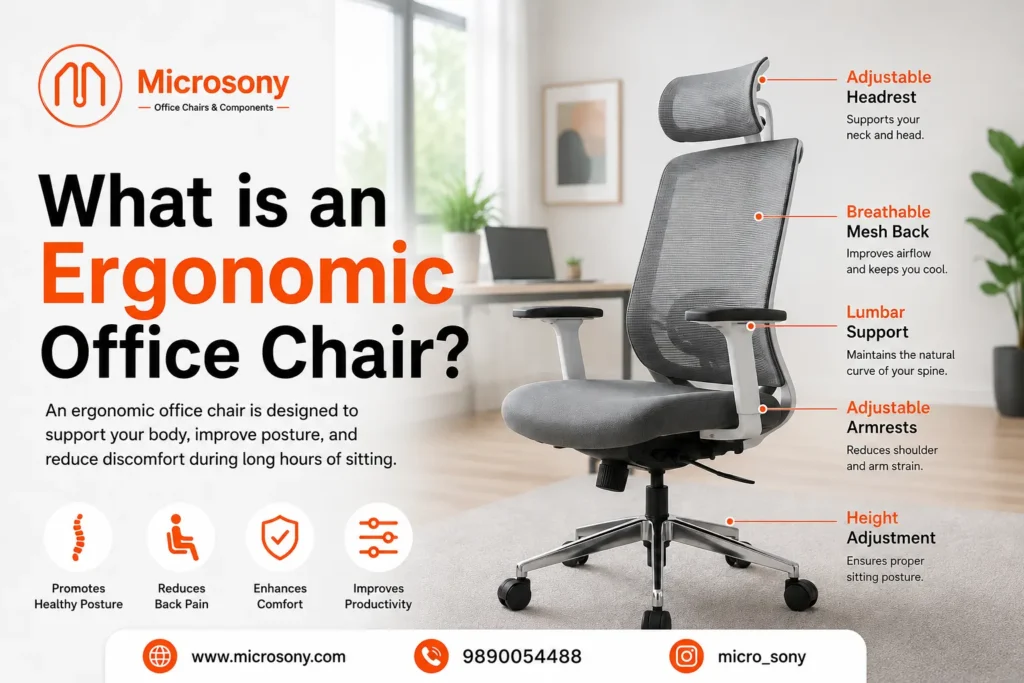
An ergonomic office chair is a specially engineered seating solution designed to support the human body in a natural, healthy, and comfortable position during long working hours. Unlike traditional office chairs, which often provide only basic seating support, an ergonomic office chair is built with scientific design principles that focus on improving posture, reducing physical stress, and enhancing overall comfort while sitting for extended periods.
The main goal of an ergonomic office chair is to maintain proper spinal alignment. The human spine has a natural curve, and when a person sits for long hours without proper support, this curve gets disturbed, leading to slouching, back pain, and muscle strain. Ergonomic chairs are designed to support this natural curve and keep the spine in a balanced position, which helps reduce long-term health issues related to poor posture.
Another important feature is lumbar support. The lower back is one of the most sensitive and pressure-prone areas during sitting. A good ergonomic office chair provides dedicated lumbar support that helps reduce pressure on the lower spine and prevents discomfort during long working hours. This support plays a key role in preventing chronic back pain and fatigue.
Ergonomic chairs also focus heavily on adjustability. Features such as adjustable height, tilt mechanism, armrest positioning, and headrest support allow users to customize the chair according to their body structure and comfort needs. This flexibility ensures that every individual, regardless of height or build, can maintain a healthy sitting posture throughout the day.
In addition, ergonomic office chairs promote comfortable seating posture by evenly distributing body weight and reducing pressure on key areas like hips, shoulders, and neck. This helps minimize muscle strain and improves blood circulation, which is essential for long working hours.
Unlike normal chairs that force the body into fixed and often uncomfortable positions, an ergonomic office chair adapts to the user’s body. This adaptability is the main reason why ergonomic seating has become a standard choice in modern corporate offices, home workspaces, and professional environments in 2026.
Key Features of Best Ergonomic Office Chair
A high-quality ergonomic office chair is designed with multiple advanced features that work together to improve comfort, support proper posture, and reduce physical strain during long working hours. Unlike basic office chairs, ergonomic models focus on the human body’s natural structure and provide adjustable support in all key areas. These features are essential for maintaining productivity, reducing back pain, and ensuring long-term seating comfort in modern workplaces.
1. Lumbar Support
Lower back support is one of the most important features of an ergonomic office chair. The lumbar region of the spine naturally carries a lot of body weight during sitting, and without proper support, it becomes highly vulnerable to pain and stiffness. A well-designed lumbar support system helps maintain the natural curve of the spine, reduces pressure on the lower back, and prevents slouching. This feature is especially important for people who sit for 7–10 hours daily, as it significantly reduces the risk of chronic back pain and improves overall sitting posture.
2. Adjustable Height
Adjustable height functionality ensures that the chair can be customized according to the user’s body height and desk level. When the chair is set at the correct height, the feet remain flat on the ground, and the knees stay in a comfortable 90-degree position. This proper alignment improves blood circulation, reduces pressure on the legs, and helps maintain a balanced sitting posture. It also prevents discomfort in the thighs and lower body during long working hours.
3. Comfortable Seat Cushion
A high-quality ergonomic office chair comes with dense and durable seat cushioning that provides long-lasting comfort. High-density foam is commonly used because it maintains its shape even after extended use. A comfortable seat cushion helps distribute body weight evenly, reducing pressure points on the hips and thighs. This ensures that users can sit for long periods without experiencing pain or discomfort, making it ideal for office professionals, remote workers, and executives.
4. Armrest Support
Armrest support plays a crucial role in reducing stress on the upper body. Properly positioned armrests allow the arms to rest comfortably while working, which helps reduce strain on the shoulders, neck, and upper back. Adjustable armrests also ensure that users can align their arms at the correct height while typing or using a mouse, improving posture and reducing muscle fatigue during long work sessions.
5. Reclining Function
The reclining feature allows users to lean back and relax the spine during short breaks. This movement helps reduce pressure on the lower back and improves overall comfort throughout the day. A good reclining mechanism also supports natural body movement, allowing users to shift positions easily instead of staying rigid for long hours. This flexibility is essential for reducing fatigue and maintaining energy levels during continuous work.
6. Headrest Support
Headrest support is an important feature for users who spend long hours working at a desk or attending meetings. It provides support to the neck and upper spine, helping reduce stiffness and strain. A properly adjustable headrest keeps the head aligned with the spine, preventing forward tilting that often leads to neck pain. This feature is especially beneficial for professionals who work extensively on computers or participate in long virtual meetings.
Benefits of Ergonomic Office Chair
Using an ergonomic office chair provides long-term benefits for both health and productivity.
✔ Reduces Back Pain
Supports spine alignment and reduces pressure on lower back.
✔ Improves Posture
Encourages correct sitting position naturally.
✔ Increases Productivity
Comfortable employees work with better focus and energy.
✔ Reduces Fatigue
Proper seating reduces physical stress during long hours.
✔ Better Blood Circulation
Prevents numbness and improves overall comfort.
Ergonomic Office Chair for Work From Home
The rise of remote working has significantly increased the demand for a high-quality ergonomic office chair, especially for home office setups. In today’s digital era, many professionals, freelancers, and business owners work from home for long hours using laptops and desktop systems. However, one of the biggest challenges in a home workspace is the lack of proper seating arrangement.
Most people initially use sofas, dining chairs, or basic household seating for work-from-home setups. While these may seem comfortable for short durations, they are not designed for long working hours. Over time, such seating positions can lead to poor posture, lower back pain, neck stiffness, and reduced concentration. This not only affects physical health but also decreases overall productivity and work efficiency.
A properly designed ergonomic office chair for home setup solves these problems by offering the right balance of comfort, support, and adjustability. It is built to support the natural curve of the spine and maintain healthy posture throughout the day. With features like lumbar support, adjustable height, cushioned seating, and proper armrest positioning, it ensures that the body remains relaxed even during long working sessions.
Using an ergonomic office chair at home provides multiple benefits such as better focus, professional-level comfort, and reduced physical strain. It also helps create a dedicated work environment, which improves discipline and mental clarity while working remotely. When the body is comfortable, the mind naturally becomes more focused and productive.
Overall, investing in an ergonomic office chair for work from home is not just about comfort—it is about maintaining long-term health, improving efficiency, and building a professional workspace within your home environment.
Types of Ergonomic Office Chairs
Different types of ergonomic office chair options are available in the market depending on usage, workspace requirements, comfort level, and professional needs. Each type is designed with specific features that suit different working environments, whether it is a corporate office, home workspace, startup setup, or executive cabin. Choosing the right type of chair plays an important role in ensuring long-term comfort, better posture, and improved productivity during working hours.
1. Executive Ergonomic Chair
The executive ergonomic chair is designed for leadership roles such as managers, directors, and business owners. It is commonly used in cabins and premium office spaces where both comfort and professional appearance are important. These chairs usually come with a premium design, high-quality cushioning, and advanced ergonomic support features. They provide superior comfort for long working hours while also enhancing the overall look of the office interior. The executive ergonomic chair is ideal for those who spend significant time in meetings, decision-making tasks, and desk work.
2. Mesh Ergonomic Chair
Mesh ergonomic chairs are one of the most popular choices in modern offices due to their breathable and lightweight design. The mesh back allows continuous airflow, which helps reduce heat buildup and keeps the user cool during long working hours. This type of ergonomic office chair is especially suitable for warm environments and extended sitting periods. It offers excellent lumbar support while maintaining a flexible and comfortable seating experience. Mesh chairs are widely used in IT companies, coworking spaces, and corporate workstations.
3. Task Chair
Task chairs are designed for daily employee use in office workstation setups. They are simple, functional, and highly practical for regular office tasks such as computer work, documentation, and customer support roles. A task chair focuses on essential ergonomic features like adjustable height, basic lumbar support, and comfortable seating posture. It is an affordable yet effective solution for organizations that need multiple seating arrangements for employees working long hours.
4. High Back Ergonomic Chair
A high back ergonomic office chair provides complete support to the back, shoulders, and neck. It is designed for users who require extended comfort and full-body support during long working sessions. The high back structure helps maintain proper spinal alignment and reduces strain on the upper body. This type of chair is ideal for professionals who spend long hours at their desks, attend frequent meetings, or require additional neck and shoulder support. It is widely preferred in executive offices and high-comfort work environments.
How to Choose Best Ergonomic Office Chair
Before buying, consider these important factors:
- Lumbar support quality
- Seat cushioning comfort
- Adjustability options
- Material durability
- Backrest flexibility
- Armrest movement
- Design and workspace fit
A good ergonomic office chair should support your body naturally and reduce pressure points.
Ergonomic Office Chair and Workplace Productivity
A comfortable employee is always more productive.
When employees sit on poor chairs:
- They feel tired faster
- Focus reduces
- Productivity drops
But when using ergonomic chairs:
- Energy levels stay stable
- Focus improves
- Work efficiency increases
This is why modern offices invest heavily in ergonomic seating solutions.
Why Companies Prefer Ergonomic Office Chairs
Businesses choose ergonomic chairs because:
- Employee health improves
- Sick leaves reduce
- Work efficiency increases
- Office looks more professional
- Long-term cost savings
It is not just furniture — it is a workplace performance tool.
Maintenance Tips for Ergonomic Office Chair
To increase chair life:
- Clean regularly
- Check wheels and base
- Avoid overload pressure
- Maintain gas lift system
- Tighten loose parts
Proper maintenance ensures long durability.
Ergonomic Office Chair Trends in 2026
Modern trends include:
- Mesh breathable chairs
- Minimalist design
- Adjustable multi-function chairs
- Premium executive seating
- Smart ergonomic designs
Workspaces are now focusing on comfort + aesthetics together.
Why Microsony Ergonomic Chairs Stand Out
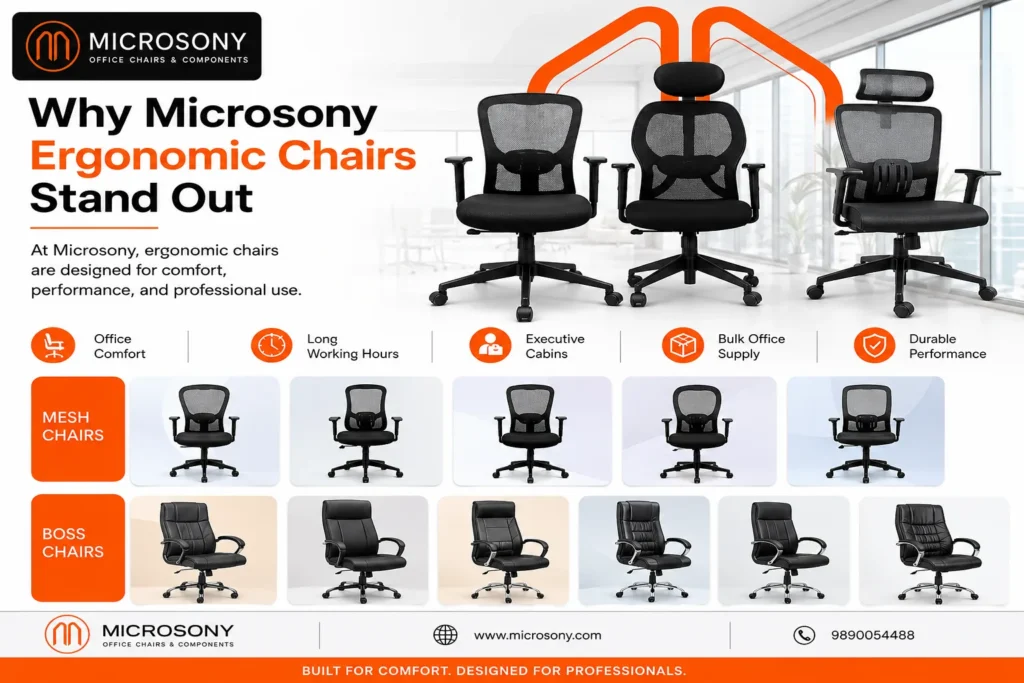
At Microsony, ergonomic chairs are designed for:
- Office comfort
- Long working hours
- Executive cabins
- Bulk office supply
- Durable performance
They are built for both comfort and professional use.
Conclusion
Choosing the right ergonomic office chair in 2026 is no longer just a matter of preference or office style — it has become an essential requirement for maintaining long-term health, comfort, and productivity in modern working environments. As work culture continues to evolve with hybrid jobs, remote setups, and long hours of computer-based tasks, the importance of proper seating has increased significantly. Poor posture and uncomfortable chairs can silently affect your spine, energy levels, and overall efficiency throughout the day.
A well-designed ergonomic office chair provides complete support to your body by maintaining correct spinal alignment, reducing pressure on the lower back, and ensuring that your sitting posture remains healthy even during extended working hours. It helps minimize common issues such as back pain, neck stiffness, shoulder strain, and fatigue, which are often caused by prolonged sitting in improper positions. Over time, these improvements not only enhance physical comfort but also contribute to better focus, improved concentration, and higher work performance.
In today’s fast-paced professional world, productivity is closely connected to comfort. When the body feels supported and relaxed, the mind naturally becomes more active and efficient. Whether you are working from a corporate office, managing tasks from a home setup, or running a business, investing in a high-quality ergonomic office chair ensures that you can work longer hours without unnecessary physical stress or discomfort.
Ultimately, choosing the right ergonomic seating solution is one of the smartest investments you can make for your workspace in 2026. It supports your health, improves your daily work experience, and creates a more professional and productive environment. A good chair is not just furniture — it is a long-term investment in your comfort, performance, and overall well-being.
FAQ – Ergonomic Office Chair
1. What is the main benefit of using an ergonomic office chair?
The primary benefit of using an ergonomic office chair is improved support for the human body during long working hours. In modern work environments, people often sit for 7 to 10 hours a day, which puts continuous pressure on the spine, neck, and lower back. A regular chair does not provide proper alignment, which can lead to posture problems, fatigue, and chronic pain over time.
An ergonomic office chair is designed to follow the natural curve of the spine and distribute body weight evenly. This reduces pressure points and helps maintain a healthy sitting posture. The lumbar support system plays a major role in reducing lower back pain, while adjustable features like seat height, armrests, and backrest angle ensure personalized comfort.
Another important benefit is increased productivity. When the body is comfortable, the mind can focus better on work without constant discomfort or distractions. Employees and professionals using ergonomic seating often report higher concentration levels and reduced tiredness at the end of the day. In simple terms, an ergonomic office chair not only improves physical health but also enhances overall work performance and efficiency.
2. Who should use an ergonomic office chair?
An ergonomic office chair is suitable for almost everyone who spends long hours sitting, but it is especially important for professionals, office workers, students, and remote employees. Anyone working in front of a computer or laptop for extended periods can benefit from ergonomic seating.
Office employees who handle documentation, customer support, software development, or design work often sit for long hours without much movement. For them, ergonomic chairs help reduce strain on the back and improve daily comfort. Similarly, business owners and managers who spend time in meetings, planning, and decision-making tasks also require comfortable seating to maintain focus and energy.
Work-from-home professionals are another major group that benefits from ergonomic chairs. Many home setups use dining chairs or sofas, which are not designed for long working hours. This often leads to posture problems and back pain. A proper ergonomic office chair helps create a professional and healthy workspace at home.
Even students who attend online classes or study for long hours can benefit from ergonomic seating. It improves posture, reduces fatigue, and helps maintain better concentration during study sessions. In short, anyone who spends significant time sitting should consider using an ergonomic office chair for long-term health benefits.
3. How does an ergonomic office chair reduce back pain?
An ergonomic office chair reduces back pain by supporting the natural alignment of the spine and minimizing stress on the lower back muscles. Back pain is usually caused by poor sitting posture, lack of lumbar support, and long periods of sitting without movement.
Ergonomic chairs are designed with built-in lumbar support that fits the natural curve of the lower spine. This prevents slouching and keeps the back in a neutral position. When the spine is properly aligned, pressure on the lower back is significantly reduced, which helps prevent pain and stiffness.
In addition, ergonomic chairs allow users to adjust seat height and backrest angle. This ensures that the feet remain flat on the ground and the knees stay in a comfortable position. Proper alignment improves blood circulation and reduces pressure on the hips and spine.
The cushioning in an ergonomic office chair also plays an important role. High-density foam distributes body weight evenly, reducing pressure on specific points. This prevents discomfort during long working hours. Over time, consistent use of an ergonomic chair can improve posture habits and significantly reduce chronic back pain issues.
4. What features should I look for in a good ergonomic office chair?
When choosing a high-quality ergonomic office chair, there are several important features to consider to ensure maximum comfort and support. One of the most important features is adjustable lumbar support, which helps maintain the natural curve of the spine and prevents lower back pain.
Seat height adjustment is another essential feature. It allows users to position their feet flat on the floor, which improves posture and reduces pressure on the legs. A good ergonomic chair should also have comfortable seat cushioning made from high-density foam to support long hours of sitting without discomfort.
Armrest adjustability is equally important because it helps reduce strain on the shoulders and neck. Properly positioned armrests allow the arms to rest naturally while working, improving overall posture. A reclining backrest function is also useful, as it allows users to lean back and relax during breaks, reducing spinal pressure.
Headrest support is recommended for those who spend long hours on computers, as it helps reduce neck strain. Finally, durability is a key factor. A strong frame, smooth wheels, and reliable gas lift system ensure long-term use. A good ergonomic office chair should combine comfort, adjustability, and durability to support daily professional use effectively.
5. Is an ergonomic office chair worth the investment in 2026?
Yes, investing in an ergonomic office chair in 2026 is absolutely worth it because it directly impacts both health and productivity. With increasing screen time, remote work culture, and long working hours, sitting-related health issues have become more common than ever before.
An ergonomic chair helps prevent long-term problems such as chronic back pain, poor posture, neck stiffness, and muscle fatigue. Instead of treating discomfort later, it focuses on prevention by supporting the body correctly during daily work routines. This makes it a long-term health investment rather than just an office purchase.
From a productivity perspective, comfort plays a major role in work efficiency. When employees or professionals are comfortable, they can focus better, work longer without fatigue, and maintain higher performance levels throughout the day. Businesses also benefit because healthier employees mean fewer breaks, better attendance, and improved output.
In terms of cost, while an ergonomic office chair may seem like a higher initial investment compared to regular chairs, it provides long-term value through durability, health benefits, and reduced medical discomfort. In 2026, where workplace wellness is a priority, ergonomic seating is not optional — it is essential for sustainable work performance and long-term well-being.