
Table of Contents
Office Chair Facts: Everything You Need to Know About Workplace Comfort and Productivity
Introduction
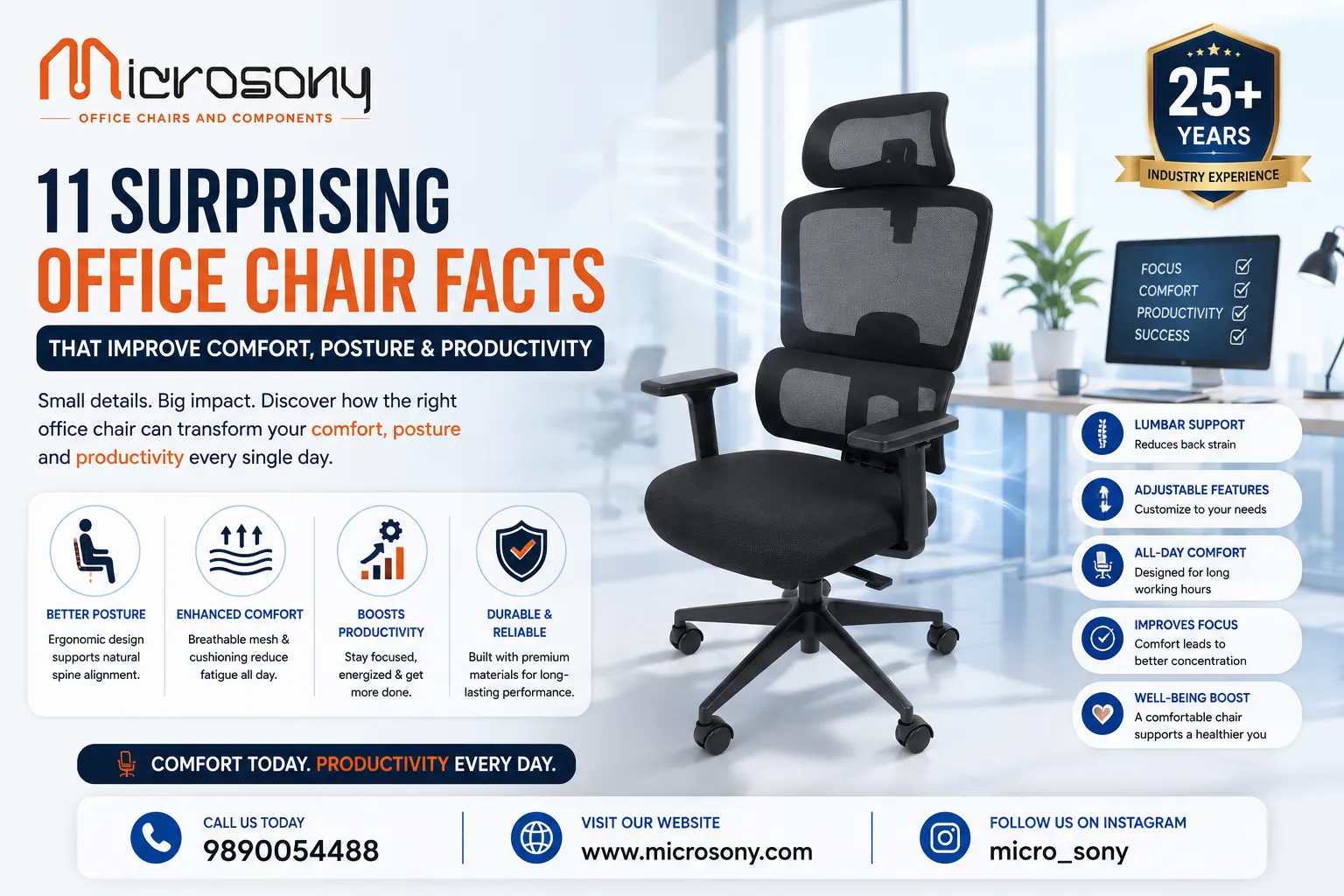
In today’s modern workplace, office chairs are often viewed as simple pieces of furniture. However, there is much more to them than most people realize. Understanding important office chair facts can help businesses, employees, entrepreneurs, and remote workers make better decisions about workplace comfort and health.
Most professionals spend between six and ten hours every day sitting at a desk. During this time, the quality of seating directly affects posture, concentration, energy levels, and overall productivity. A poorly designed chair can contribute to back pain, neck strain, muscle fatigue, and reduced work performance. On the other hand, a properly designed ergonomic chair supports the body, promotes healthy posture, and improves comfort throughout the workday.
One of the most interesting office chair facts is that seating has evolved significantly over the years. Modern office chairs are now designed using ergonomic principles that focus on supporting natural body movement and spinal alignment. Features such as lumbar support, height adjustment, tilt mechanisms, adjustable armrests, and breathable materials have become standard in quality office seating.
Another important fact is that office seating affects more than physical health. Comfortable employees tend to be more productive, engaged, and satisfied with their work environment. Businesses that invest in quality seating often see improvements in employee wellness, morale, and overall workplace efficiency.
This comprehensive guide explores essential office chair facts, including their history, ergonomic benefits, health impact, productivity advantages, key features, maintenance tips, and how to choose the right chair for different workplace environments.
Why Office Chair Facts Matter
Many people underestimate how important seating is to their daily work experience. While office furniture is often viewed as a basic workplace necessity, the reality is that seating has a direct impact on comfort, health, productivity, and overall job performance. Understanding key office chair facts helps individuals recognize the strong connection between proper seating, healthy posture, and workplace efficiency.
One of the most important office chair facts is that the average office worker spends thousands of hours sitting every year. Whether working in a corporate office, home office, or shared workspace, prolonged sitting has become a normal part of modern professional life. Without adequate support, this extended sitting time can lead to poor posture habits, muscle fatigue, lower back pain, neck stiffness, and other long-term physical issues that affect both health and productivity.
Modern ergonomic seating is specifically designed to address these challenges. Many valuable office chair facts show that chairs with proper lumbar support, adjustable height, comfortable cushioning, and ergonomic backrests help reduce pressure on the spine, neck, shoulders, and hips. These features encourage healthier sitting positions and provide the support needed for long working hours. As a result, users experience less discomfort and can remain focused on their tasks for longer periods.
Another reason why office chair facts matter is their impact on workplace performance. When employees are physically comfortable, they tend to have higher concentration levels, better energy throughout the day, and fewer interruptions caused by discomfort. Comfortable seating can also contribute to improved morale and overall workplace satisfaction.
Understanding these office chair facts allows both businesses and individuals to make informed decisions when selecting workplace furniture. Instead of choosing chairs based solely on appearance, trends, or price, buyers can prioritize ergonomics, durability, adjustability, and long-term comfort. This approach not only supports employee well-being but also helps create a healthier, more productive, and professional working environment.
Surprising Office Chair Facts You Should Know
Fact #1: Your Chair Directly Impacts Productivity
Comfortable seating reduces distractions caused by discomfort and fatigue. Employees who sit comfortably can concentrate longer and complete tasks more efficiently.
Fact #2: Poor Seating Can Affect Posture
One of the most important office chair facts is that poor seating contributes significantly to posture problems. Without adequate lumbar support, users often develop unhealthy sitting habits.
Fact #3: Ergonomic Chairs Reduce Workplace Fatigue
Ergonomic office chairs are specifically designed to support natural body alignment. This reduces muscle strain and helps workers stay comfortable throughout the day.
Fact #4: Adjustable Features Matter
Height adjustment, tilt functions, armrests, and lumbar support allow users to customize their seating position. This flexibility improves overall comfort and usability.
Fact #5: Breathable Materials Improve Comfort
Mesh office chairs help regulate body temperature by promoting airflow, making them ideal for long working hours.
The Connection Between Office Chairs and Health
Proper seating is closely linked to employee wellness, overall comfort, and long-term physical health. Many important office chair facts highlight how the right seating solution can significantly influence posture, spinal health, and daily workplace performance. Since most professionals spend several hours sitting each day, the quality of their chair becomes a critical factor in maintaining both comfort and well-being.
One of the most valuable office chair facts is that prolonged sitting in a poorly designed chair can place excessive stress on the spine, neck, shoulders, and lower back. Over time, this can lead to musculoskeletal disorders, chronic discomfort, poor posture habits, and reduced mobility. Employees who use chairs without proper support are more likely to experience fatigue, stiffness, and physical strain during the workday.
A high-quality office chair is designed to support the natural alignment of the spine and distribute body weight evenly across the seating surface. This helps reduce pressure on sensitive areas such as the lower back, hips, and shoulders while encouraging healthier sitting habits. Proper lumbar support is especially important because it helps maintain the natural curve of the lower spine and minimizes the risk of chronic back pain and posture-related issues.
Another important point among modern office chair facts is that ergonomic seating can help reduce repetitive strain injuries caused by long hours of desk work. Features such as adjustable armrests, seat height control, and tilt mechanisms allow users to customize their sitting position according to their body type and work requirements, reducing unnecessary stress on muscles and joints.
When employees are physically comfortable, they are more likely to remain focused, productive, and engaged throughout the day. They experience fewer health-related interruptions, take fewer breaks due to discomfort, and maintain higher energy levels during work. These office chair facts clearly demonstrate that investing in proper seating is not just about comfort—it is an investment in employee health, workplace efficiency, and long-term wellness.
Essential Features Found in Modern Office Chairs
Modern office chairs include a variety of features designed to improve user comfort and performance.
Ergonomic Back Support
Supports the natural curve of the spine and helps maintain healthy posture.
Adjustable Height
Allows users to position themselves correctly relative to desks and workstations.
Lumbar Support
Reduces lower back strain and encourages proper sitting posture.
Tilt Mechanism
Provides flexibility and movement throughout the workday.
Durable Base and Wheels
Ensures stability, mobility, and long-term durability.
Office Chair Facts for Remote Workers
The rapid growth of remote and hybrid work has increased awareness about workplace ergonomics and the importance of proper seating. While many professionals have successfully adapted to working from home, a large number still use dining chairs, sofas, or other non-ergonomic seating arrangements that were never designed for long working hours. This can negatively affect posture, comfort, productivity, and overall health. Understanding important office chair facts can help remote workers create a more supportive and efficient work environment.
One of the most valuable office chair facts for remote workers is that the chair used every day can have a direct impact on physical well-being. Sitting for extended periods in an unsupportive chair often leads to lower back pain, neck stiffness, shoulder tension, and general fatigue. Over time, these issues can become chronic and affect both work performance and quality of life.
Another important among modern office chair facts is that ergonomic seating promotes proper spinal alignment and reduces pressure on key areas of the body. Features such as lumbar support, adjustable height, headrest support, and tilt mechanisms allow users to maintain healthier sitting positions throughout the day. This helps reduce discomfort and prevents many common problems associated with prolonged desk work.
For remote professionals, investing in a quality ergonomic chair is not just about comfort—it is about creating a productive workspace. One of the most practical office chair facts is that employees who are physically comfortable tend to stay focused longer, experience fewer distractions, and maintain higher energy levels during working hours. Proper seating supports concentration and allows individuals to work more efficiently without constant posture adjustments or discomfort.
Additionally, a dedicated ergonomic chair helps transform a home workspace into a more professional environment. These office chair facts demonstrate that choosing the right seating solution can improve productivity, support long-term health, and make remote work more comfortable and sustainable for years to come.
Common Mistakes People Make When Buying Office Chairs
Many buyers focus only on price or appearance when purchasing office seating. However, understanding important office chair facts can help avoid common mistakes that lead to discomfort, poor posture, and reduced productivity. Before making a purchase, it is important to evaluate comfort, ergonomics, durability, and adjustability rather than choosing a chair based solely on looks.
Ignoring Lumbar Support
One of the most common mistakes is overlooking lumbar support. Proper lower back support helps maintain the natural curve of the spine and reduces strain during long working hours. Many office chair facts show that inadequate lumbar support is a major cause of workplace back pain.
Choosing Style Over Comfort
A visually attractive chair may enhance office aesthetics, but appearance should never be prioritized over comfort. A chair that looks modern but lacks ergonomic support can lead to discomfort and fatigue over time.
Purchasing Chairs Without Adjustability
Adjustability is essential for maintaining proper posture. Features such as seat height adjustment, tilt mechanisms, and adjustable armrests allow users to customize the chair according to their body type and work requirements.
Selecting Poor-Quality Materials
Low-quality materials often wear out quickly and provide less comfort. Poor cushioning, weak frames, and low-grade upholstery can reduce both durability and user satisfaction.
Overlooking Durability
Many buyers focus on initial cost instead of long-term value. Durable office chairs with strong construction and quality components typically last longer and require fewer repairs or replacements.
Ignoring Seat Cushion Quality
The quality of seat cushioning plays a major role in daily comfort. A seat that is too hard or too soft can cause discomfort during extended sitting periods and negatively affect posture.
Not Considering Workspace Requirements
Different workplaces require different seating solutions. A chair suitable for conference rooms may not provide enough support for employees who work at desks all day. Understanding workplace needs is essential when selecting office seating.
Buying Without Testing Comfort
Many people purchase chairs online or based on appearance without considering how they actually feel during use. Comfort should always be a key factor in the decision-making process.
Neglecting Breathability
Breathable materials such as mesh help improve airflow and reduce heat buildup during long working hours. This is one of the often-overlooked office chair facts that can significantly improve comfort.
Focusing Only on Price
While budget is important, the cheapest option is not always the best value. Investing in a well-designed ergonomic chair often provides better comfort, durability, and long-term benefits.
Understanding these office chair facts helps buyers make smarter purchasing decisions and select seating solutions that support health, comfort, and productivity for years to come.
Maintenance Facts Every Office Chair Owner Should Know
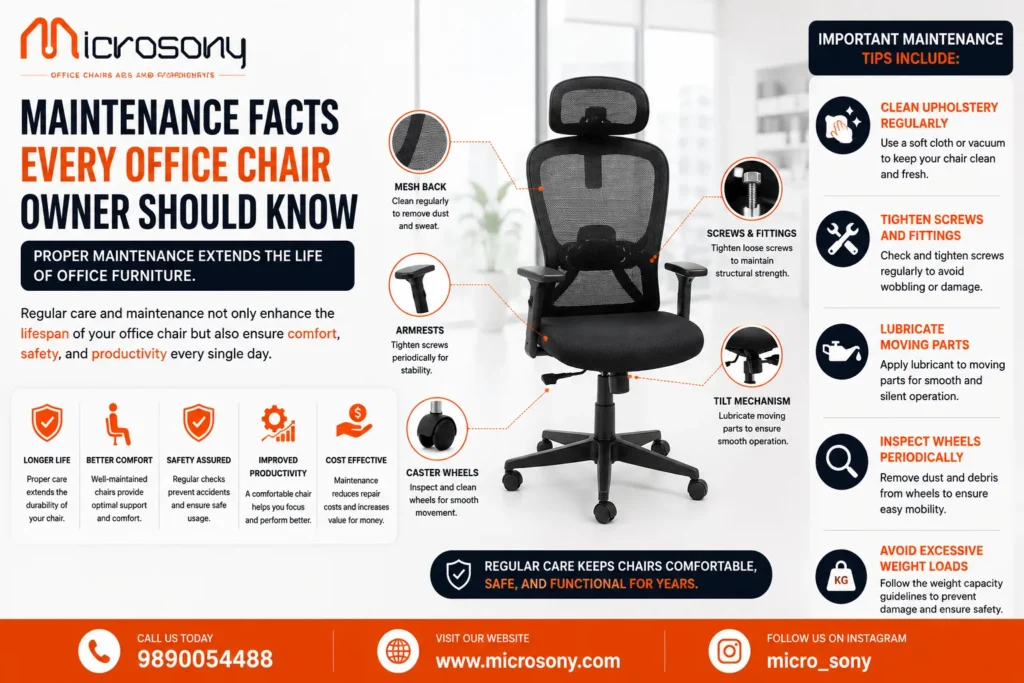
Proper maintenance extends the life of office furniture.
Important maintenance tips include:
- Clean upholstery regularly
- Tighten screws and fittings
- Lubricate moving parts
- Inspect wheels periodically
- Avoid excessive weight loads
Regular care keeps chairs comfortable, safe, and functional for years.
Office Chair Facts and Workplace Productivity
Workplace productivity is influenced by many factors, including seating comfort. Research consistently shows that employees perform better when they are physically comfortable.
A well-designed chair reduces fatigue, supports concentration, and allows workers to remain productive for longer periods. This is one of the most valuable office chair facts for businesses seeking to improve workplace efficiency.
Conclusion
Understanding important office chair facts helps individuals and organizations create healthier, more productive work environments. Modern office seating is designed to support posture, reduce physical strain, and improve overall workplace comfort.
Whether you are furnishing a corporate office, home workspace, startup, or co-working environment, choosing the right chair is a long-term investment in health, productivity, and professional performance. By focusing on ergonomics, comfort, durability, and proper maintenance, users can enjoy the full benefits that quality office seating provides.
Frequently Asked Questions (FAQs) About Office Chair Facts
1. Why are office chair facts important for employees and businesses?
Understanding office chair facts is important because office seating directly affects comfort, posture, health, and productivity. Most professionals spend several hours sitting each day, making the quality of their chair a critical factor in their overall work experience. A properly designed office chair supports the spine, reduces pressure on muscles and joints, and helps maintain correct posture during long working hours.
For businesses, investing in quality office seating can improve employee satisfaction, reduce workplace discomfort, and enhance productivity. Employees who are comfortable at work are more likely to stay focused and perform their tasks efficiently. Learning key office chair facts allows organizations and individuals to make informed decisions when selecting office furniture and creating healthier work environments.
2. How does an office chair affect posture and spinal health?
One of the most important office chair facts is that seating has a direct impact on posture and spinal alignment. Poor-quality chairs often lack adequate back support, which can cause users to slouch or sit in unhealthy positions for extended periods. Over time, this can lead to lower back pain, neck strain, shoulder tension, and posture-related issues.
An ergonomic office chair helps maintain the natural curve of the spine by providing proper lumbar support and adjustable seating features. This encourages healthy sitting habits and reduces stress on the back and neck. Maintaining correct posture not only improves comfort but also helps prevent long-term musculoskeletal problems.
3. What features should I look for in a quality office chair?
When choosing office seating, several important office chair facts should be considered. A quality chair should include ergonomic lumbar support, adjustable seat height, armrests, tilt functionality, and a comfortable seat cushion. These features allow users to customize the chair according to their body type and work requirements.
Breathable materials such as mesh can improve airflow during long working hours, while a strong base and smooth wheels enhance durability and mobility. Investing in a chair with these features ensures greater comfort, better posture support, and improved long-term value.
4. Are ergonomic office chairs really worth the investment?
Yes, ergonomic office chairs are often worth the investment because they provide significant benefits for both comfort and health. One of the most practical office chair facts is that ergonomic seating can help reduce workplace fatigue, discomfort, and physical strain caused by prolonged sitting.
Although ergonomic chairs may cost more initially, they often last longer and provide better support than standard office chairs. They can also help reduce the risk of back pain and posture-related problems, making them a valuable long-term investment for professionals, businesses, and remote workers.
5. How can proper office seating improve workplace productivity?
Comfort and productivity are closely connected. Among the most valuable office chair facts is the fact that employees who sit comfortably tend to work more efficiently and remain focused for longer periods. Poor seating often causes discomfort, leading to frequent breaks, reduced concentration, and lower overall performance.
Proper office seating supports the body, reduces fatigue, and helps users maintain good posture throughout the day. As a result, employees can focus more on their work rather than dealing with physical discomfort. This leads to improved productivity, better job satisfaction, and a healthier workplace environment overall.