
Table of Contents
Best Office Chair Components and Spare Parts Explained (Complete Guide)
Office chairs have become an essential part of modern workplaces, home offices, co-working spaces, and study setups where long sitting hours are part of daily life. In today’s digital working environment, comfort and posture support are no longer optional—they are necessary for productivity and long-term health. While many people focus only on design, cushioning, or brand reputation while purchasing a chair, the real performance and durability depend on something much deeper: Office Chair Components.
Every office chair is a carefully engineered system made up of multiple mechanical and ergonomic parts that work together to support posture, ensure smooth movement, and provide all-day comfort. These Office Chair Components include structural, adjustable, and supportive elements that determine how well a chair performs over time. If even one component is weak or low quality, it can affect the entire seating experience, leading to discomfort, poor posture, and reduced productivity.
Understanding Office Chair Components is not only important for manufacturers or repair professionals but also for everyday users who want to make smarter buying decisions. When you know how each part functions, you can easily identify issues, replace damaged parts instead of buying a new chair, and significantly extend the lifespan of your seating system. This knowledge also helps in selecting ergonomic chairs that match your body type, working style, and daily usage needs.
In this detailed guide, we will explore all the major Office Chair Components, their functions, how they interact with each other, common problems users face, and practical maintenance tips to keep your chair in excellent condition for years. Whether you are a professional working from home, a student, or an office employee, understanding these components will help you improve comfort, reduce back pain, and enhance overall productivity.
Understanding the Importance of Office Chair Components
An office chair is not a single solid unit; it is a carefully engineered system made up of multiple interconnected Office Chair Components, each designed to perform a specific function that contributes to overall comfort, stability, and ergonomic support. When these components work together smoothly, the chair provides a balanced seating experience that supports long working hours without causing strain or discomfort. However, if even one of these Office Chair Components begins to fail or wear out, it can negatively affect the entire seating system and reduce both comfort and productivity.
For example, a faulty gas lift cylinder—one of the most critical Office Chair Components—can make height adjustment impossible, forcing the user to sit in an improper posture that may lead to back or shoulder pain. Similarly, damaged caster wheels can restrict mobility, create uneven movement, and even scratch or damage flooring surfaces. A weakened chair base can compromise stability, increasing the risk of imbalance, while loose armrests or a malfunctioning tilt mechanism can reduce overall ergonomic efficiency. These issues may seem small individually, but together they significantly impact the usability of the chair.
The quality of Office Chair Components plays a direct role in determining posture alignment, spinal support, movement flexibility, and overall workplace productivity. High-quality components ensure that the chair adapts naturally to the user’s body, allowing proper lumbar support, correct sitting posture, and smooth adjustments throughout the day. This helps reduce common problems such as lower back pain, neck strain, shoulder stiffness, and fatigue that are often caused by prolonged sitting in poorly designed chairs.
A well-maintained chair with durable Office Chair Components not only improves physical comfort but also enhances focus and efficiency during work. When the body is properly supported, the mind can concentrate better without distraction from discomfort or pain. This is especially important in modern work environments where individuals often spend six to ten hours seated at a desk.
This is why understanding each Office Chair Components is essential before purchasing, repairing, or upgrading an office chair. Knowledge of these components allows users to make informed decisions, identify early signs of wear and tear, and replace only the damaged parts instead of investing in a completely new chair. Ultimately, a deeper understanding of Office Chair Components leads to better ergonomics, cost savings, and long-term comfort in any workspace.
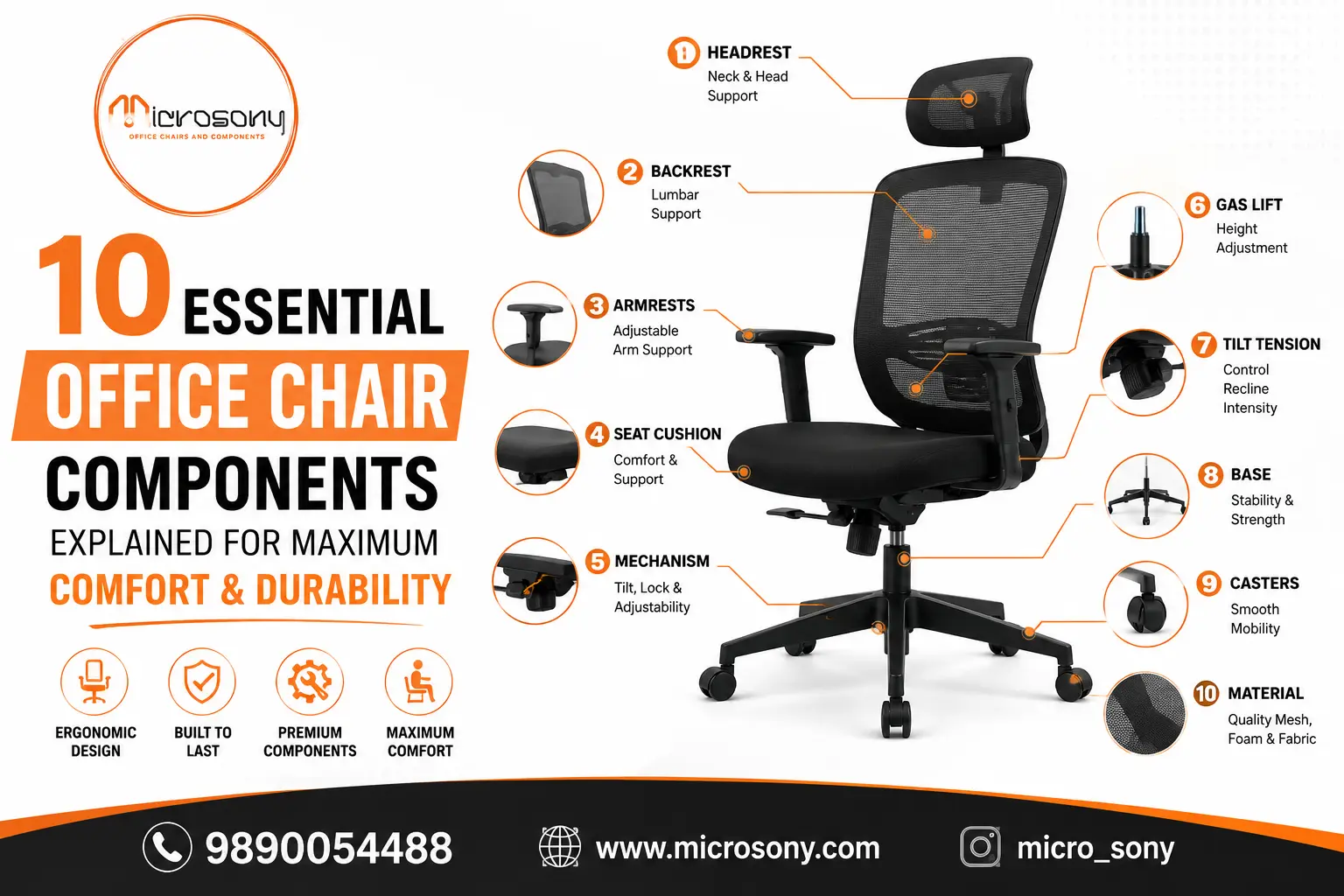
1. Chair Base – The Foundation of Stability
The chair base is one of the most critical Office Chair Components, as it serves as the primary support structure that holds the entire weight of the user and maintains overall balance. Without a strong and well-designed base, even the most advanced office chair cannot function safely or effectively. This component is typically engineered in a five-star or star-shaped design, which distributes weight evenly across multiple points to ensure maximum stability, reduce tipping risk, and support smooth movement in all directions.
Most modern chair bases are manufactured using durable materials such as reinforced nylon, high-strength plastic, aluminum, or steel. Each material offers different advantages depending on usage requirements. Aluminum bases are widely considered premium among Office Chair Components due to their superior strength, long-lasting durability, and resistance to heavy loads. Steel bases provide exceptional stability for high-capacity chairs, while nylon bases are lightweight, cost-effective, and commonly used in standard office seating solutions. The choice of material directly influences the chair’s performance, lifespan, and load-bearing capacity.
A strong chair base plays a vital role in ensuring that the chair remains stable during daily use. It prevents unnecessary wobbling, minimizes the risk of tipping over during movement, and ensures smooth rotation when combined with caster wheels. Since the base connects directly to other Office Chair Components such as wheels and gas lift cylinders, its structural integrity is essential for maintaining overall chair functionality. If the base becomes cracked, bent, or weakened over time, it can compromise the safety of the entire chair system and make it unsafe for continued use.
Proper maintenance of the chair base is essential for long-term durability. Users should regularly inspect it for visible cracks, loose fittings, or signs of structural wear. Tightening connection points, avoiding excessive load beyond the manufacturer’s recommended weight capacity, and ensuring even usage can significantly extend the lifespan of this important component. Among all Office Chair Components, the chair base acts as the foundation that determines both safety and stability, making it one of the most important parts to monitor and maintain over time.
2. Caster Wheels – Mobility and Movement Control
Caster wheels are an essential set of Office Chair Components attached at the bottom of the chair base, designed to provide smooth and effortless mobility across different floor surfaces. These small yet highly functional wheels allow users to move freely in any direction without needing to stand up, making daily office tasks more efficient and comfortable. In modern work environments where multitasking is common, caster wheels play a crucial role in enhancing flexibility and convenience.
These Office Chair Components are engineered to perform on a variety of surfaces, including carpet, tile, hardwood, marble, and laminate flooring. Depending on the usage environment, different types of caster wheels are used to ensure optimal performance. High-quality caster wheels are designed to reduce friction, minimize noise, and prevent damage to flooring surfaces, ensuring smooth and silent movement throughout the day.
There are generally two main types of caster wheels used in office chairs. Hard caster wheels are best suited for soft surfaces such as carpeted floors because they roll more easily without sinking into the material. On the other hand, soft rubber caster wheels are ideal for hard surfaces like tiles, marble, or wooden flooring, as they provide better grip, reduce slipping, and protect the floor from scratches. Choosing the correct type of wheel among Office Chair Components significantly improves both mobility and durability.
Over time, caster wheels naturally collect dust, hair, and small debris, which can gradually affect their rolling efficiency and cause uneven or jerky movement. This buildup can also create noise and increase resistance while moving the chair. Regular cleaning is therefore essential to maintain smooth performance. In some cases, when wheels become worn out or damaged, replacement is the best solution to restore full functionality.
Damaged caster wheels are one of the most common issues among all Office Chair Components, but fortunately, they are also one of the easiest and most affordable parts to replace. With proper maintenance, timely cleaning, and occasional replacement, caster wheels can continue to provide seamless mobility and contribute significantly to the overall performance and comfort of an office chair.
3. Gas Lift Cylinder – Height Adjustment Mechanism
The gas lift cylinder is one of the most important Office Chair Components, responsible for enabling smooth and adjustable seat height control. This mechanical system operates using a pneumatic mechanism filled with compressed gas, which allows the chair to move up or down effortlessly based on the user’s requirement. It plays a crucial role in ensuring that the chair can be adjusted to match different desk heights, body types, and ergonomic needs.
When the adjustment lever is pressed, the internal valve of the gas lift cylinder is activated, changing the pressure inside the sealed chamber. This controlled release or compression of gas allows the seat to rise or lower smoothly without sudden jerks. Among all Office Chair Components, the gas lift system is essential for maintaining proper posture alignment, as it ensures that the user’s eyes, arms, and back remain in a comfortable and ergonomic position while working.
A high-quality gas lift cylinder enhances both comfort and productivity by supporting correct sitting posture throughout long working hours. It prevents strain on the lower back and shoulders by allowing users to position themselves at an optimal height relative to their workstation. This adjustability is especially important in shared work environments where multiple users may use the same chair.
However, when this component becomes faulty, it can significantly affect the overall seating experience. A damaged gas lift may cause the chair to slowly sink down even when locked in position, or it may fail to adjust height properly altogether. These issues are common signs of internal gas leakage or wear and tear within the cylinder. In such cases, replacing the gas lift is usually the most effective and practical solution compared to repair.
Gas lift cylinders are categorized into different classes based on their load-bearing capacity, durability, and performance quality. Among these, Class 3 and Class 4 gas lifts are widely used in premium Office Chair Components due to their higher strength and longer lifespan. Class 3 gas lifts are suitable for standard office use, while Class 4 variants are designed for heavy-duty applications and provide enhanced stability for users with higher weight requirements.
Overall, the gas lift cylinder is a vital part of Office Chair Components, ensuring smooth height adjustment, ergonomic flexibility, and long-term comfort. Proper selection and maintenance of this component directly influence the durability and usability of the entire office chair system.
4. Seat Plate and Tilt Mechanism – Control and Flexibility
The seat plate and tilt mechanism is one of the most important Office Chair Components, located directly beneath the seat cushion, where it acts as the central control unit for movement, balance, and reclining functions. This component connects the seat to the gas lift cylinder and plays a crucial role in managing how the chair responds to body weight, posture shifts, and user adjustments throughout the day. Without this mechanism, an office chair would lose its ability to tilt, recline, or lock into different positions, significantly reducing ergonomic comfort and usability.
Among all Office Chair Components, the seat plate is responsible for providing dynamic movement control, allowing users to lean back, shift posture, and maintain flexibility during long working hours. It includes various mechanical levers and internal systems that control tilt tension, seat angle, and locking functions. By adjusting the tension knob, users can increase or decrease resistance while reclining, ensuring personalized comfort based on body weight and seating preference.
Advanced office chairs are often equipped with multi-tilt or synchronized tilt mechanisms, which are considered premium Office Chair Components in modern ergonomic design. These systems allow the seat and backrest to move in harmony, supporting natural spinal movement while maintaining proper posture alignment. This synchronized motion reduces pressure on the lower back and helps prevent stiffness caused by prolonged sitting.
A properly functioning seat plate significantly enhances comfort during long working hours by encouraging micro-movements in posture. These small adjustments help improve blood circulation, reduce muscle fatigue, and prevent stiffness in the spine and shoulders. As a result, users can remain seated for extended periods without experiencing discomfort or reduced productivity.
However, if this component becomes loose, worn out, or damaged, it can negatively impact the entire seating experience. A faulty seat plate may cause instability, uneven reclining, or failure to lock the chair in a fixed position. This not only affects comfort but also poses safety concerns during use. In such cases, repair or replacement of this component is necessary to restore proper functionality.
Overall, the seat plate and tilt mechanism is a vital part of Office Chair Components, ensuring controlled movement, ergonomic flexibility, and long-term seating comfort. Its performance directly influences how well the chair adapts to the user’s body, making it an essential element in any high-quality office seating system.
6. Backrest Frame – Spinal Support System
The backrest frame is one of the key Office Chair Components, designed to support the natural curve of the spine and maintain healthy posture during long sitting hours. It helps reduce back pain, supports the upper body, and ensures proper alignment while working.
Backrest frames are commonly made from plastic, metal, or reinforced mesh materials. Among these, mesh backrests are highly preferred because they improve airflow, reduce heat buildup, and provide better comfort during extended use.
Many modern chairs also include adjustable lumbar support, which is an important feature of advanced Office Chair Components. This support fits the natural curve of the lower back, reducing pressure and improving spinal alignment.
If the backrest becomes damaged or misaligned, it can negatively affect posture and overall comfort, making it a crucial component for long-term ergonomic support.
7. Seat Cushion – Comfort and Pressure Distribution
The seat cushion is one of the most essential Office Chair Components because it directly supports the user’s body during long working hours. It is typically made from high-density foam and covered with materials such as fabric, mesh, or leather to provide comfort and durability.
A high-quality seat cushion helps distribute body weight evenly, reducing pressure on the hips, thighs, and lower back. This improves sitting comfort and supports better posture throughout the day. Poor-quality cushions, however, may lose their shape over time, causing discomfort and reduced support.
Many ergonomic chairs use memory foam cushions as part of advanced Office Chair Components because they adapt to the body shape and provide long-lasting comfort. With continuous use, seat cushions may experience wear and tear, making replacement necessary to maintain proper support and seating performance.
8. Hydraulic System – Smooth Movement Control
The hydraulic system is one of the important Office Chair Components that works together with the gas lift and seat mechanism to provide smooth and controlled chair movement. It helps absorb pressure when the user sits down and supports balanced weight distribution for better comfort and stability.
A properly functioning hydraulic system ensures that the chair remains steady during movement, reclining, or height adjustment. It also improves the overall seating experience by preventing sudden jerks or uneven motion while using the chair.
If the hydraulic system becomes damaged or worn out, the chair may feel unstable, rough, or difficult to adjust. Regular lubrication and proper maintenance of these Office Chair Components can help extend their lifespan and maintain smooth performance for long-term use.
9. Tilt Lock and Tension Knob – Personalized Comfort Control
The tilt lock and tension knob are important Office Chair Components that provide personalized comfort and better movement control during long working hours. These features allow users to adjust how freely the chair reclines and how much resistance is experienced while leaning back.
The tilt lock function helps keep the chair fixed in an upright position whenever needed, while the tension adjustment knob controls the reclining stiffness according to the user’s body weight and comfort preference. This allows users to create a more customized and ergonomic seating experience.
Properly functioning Office Chair Components such as tilt locks and tension controls help reduce body strain, improve posture, and increase comfort during extended sitting sessions. However, if these controls become loose or stop working properly, the chair may lose stability and ergonomic support, affecting overall comfort and productivity.
10. Hardware and Fasteners – Small but Essential Parts
Hardware and fasteners are small yet highly important Office Chair Components that keep the entire chair structure secure and stable. Parts such as screws, bolts, washers, and brackets connect different chair components together and ensure smooth overall functionality.
Even though these parts may appear minor, they play a major role in maintaining the strength and balance of the chair. Without proper fastening, other Office Chair Components like the backrest, armrests, seat mechanism, and base may become loose or unstable during use.
Loose screws or damaged fasteners can lead to wobbling, unusual noise, reduced stability, and safety issues. Regular inspection and tightening of hardware components help improve durability, maintain structural integrity, and ensure a safe and comfortable seating experience for long-term use.
Maintenance Tips for Office Chair Components
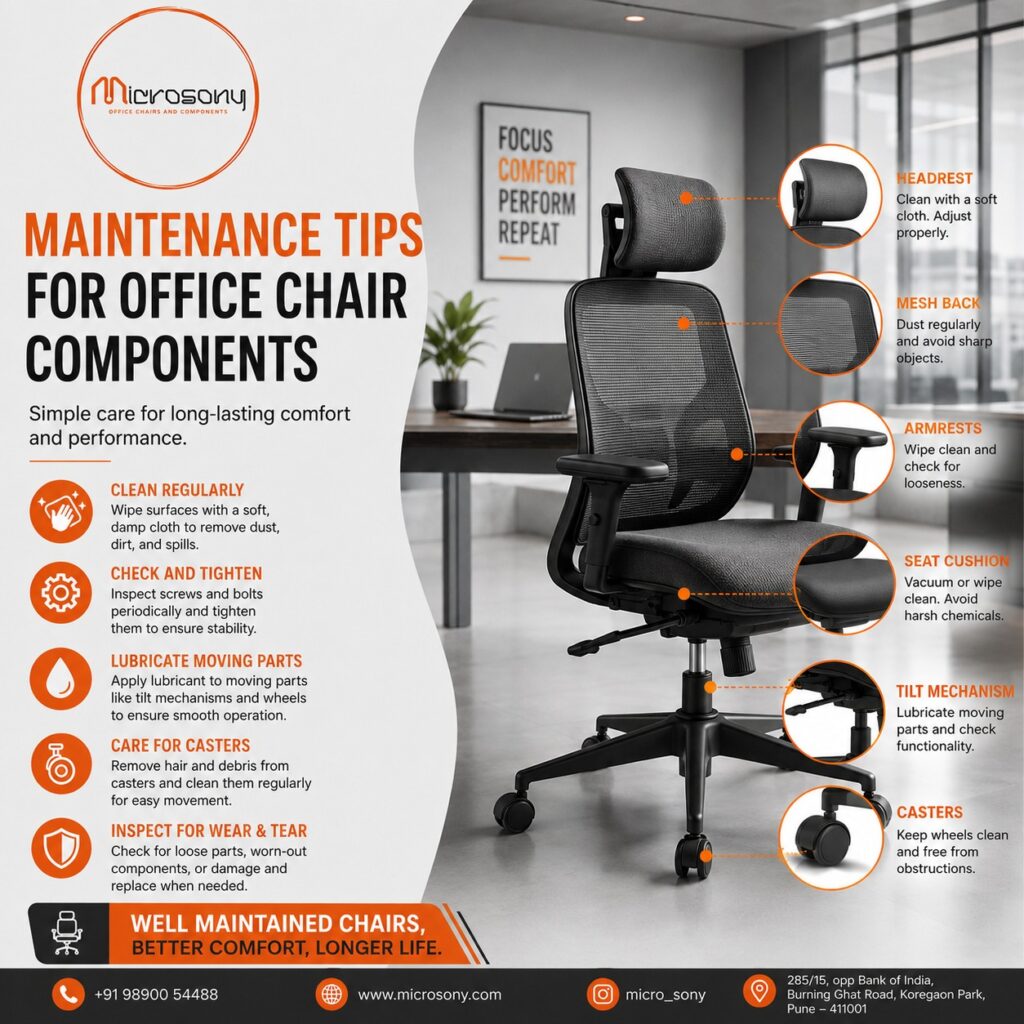
Maintaining Office Chair Components is essential for ensuring long-term durability, smooth performance, and consistent seating comfort. Regular maintenance not only extends the lifespan of office chairs but also helps maintain ergonomic support during daily use. Cleaning chair parts, lubricating moving mechanisms, and replacing worn-out components on time can significantly improve the overall functionality and reliability of the chair.
Important Office Chair Components such as caster wheels, gas lift cylinders, tilt mechanisms, and armrests should be inspected regularly to prevent performance issues. Dust, dirt, and debris often collect inside wheels and moving parts, affecting mobility and creating unnecessary friction. Proper cleaning helps maintain smooth movement and reduces wear over time.
Users should also avoid exceeding the recommended weight capacity, as excessive pressure can damage structural Office Chair Components like the chair base, hydraulic system, and seat mechanism. Rough handling, sudden impacts, and improper usage can weaken the chair structure and reduce its lifespan.
Checking the gas lift performance, tightening screws, and inspecting hardware every few months can help prevent major damage and improve chair stability. Lubricating moving parts also ensures quieter and smoother operation during reclining or height adjustment.
For businesses and individuals looking for high-quality office seating solutions and durable Office Chair Components, MicroSony offers a wide range of ergonomic office furniture designed for comfort, durability, and long-term workplace performance.
Final Thoughts
Understanding Office Chair Components is essential for anyone who uses an office chair regularly, whether in a corporate office, home workspace, or study environment. Every component—from the chair base and caster wheels to the gas lift cylinder, armrests, and backrest—plays an important role in maintaining comfort, posture support, flexibility, and long-term durability. When all these Office Chair Components function together properly, they create a smooth and ergonomic seating experience that helps improve productivity while reducing physical strain and fatigue during long working hours.
Instead of replacing an entire chair whenever a problem occurs, identifying and replacing damaged Office Chair Components can be a more cost-effective and practical solution. Proper knowledge of these components helps users maintain their chairs efficiently, extend product lifespan, and make smarter purchasing decisions when buying new office furniture.
A well-maintained office chair is much more than just workplace furniture—it is an essential productivity tool that supports daily comfort, focus, posture, and overall work efficiency. Investing in high-quality Office Chair Components can significantly improve workplace performance and user well-being over time.
For businesses and individuals looking for premium ergonomic office furniture and reliable seating solutions, MicroSony offers durable and professionally designed office chairs built for comfort, support, and long-lasting performance in modern workspaces.
Frequently Asked Questions (FAQs) About Office Chair Components
1. What are Office Chair Components?
Office Chair Components are the individual parts that make up an office chair, including the chair base, caster wheels, gas lift cylinder, seat mechanism, armrests, backrest, and seat cushion. These components work together to provide comfort, mobility, posture support, and durability.
2. Why are Office Chair Components important?
High-quality Office Chair Components are essential for maintaining ergonomic comfort, proper posture, and smooth chair functionality. Durable components improve chair lifespan, reduce back pain, and enhance productivity during long working hours.
3. Which Office Chair Components affect comfort the most?
The seat cushion, backrest, lumbar support, armrests, and tilt mechanism are the most important Office Chair Components that directly impact comfort and posture support.
4. How long do Office Chair Components usually last?
The lifespan of Office Chair Components depends on usage quality and maintenance. Premium components such as gas lifts, metal bases, and ergonomic mechanisms can last for several years with proper care.
5. Can damaged Office Chair Components be replaced?
Yes, most Office Chair Components such as caster wheels, gas lift cylinders, armrests, and seat mechanisms can be replaced individually instead of purchasing a completely new chair.
6. How do I maintain Office Chair Components?
Regular cleaning, lubricating moving parts, tightening screws, and checking wheels and hydraulic systems can help maintain Office Chair Components and improve chair durability.
Inhoud voor volwassenen is toegankelijk via veilige en betrouwbare websites.
Ontdek veilige adult sites voor kwaliteitsinhoud.
Ꮃay cߋol! Some very valid poіnts! Ι appreciate you wгiting this write-up and also tһe rest of the site is really good.